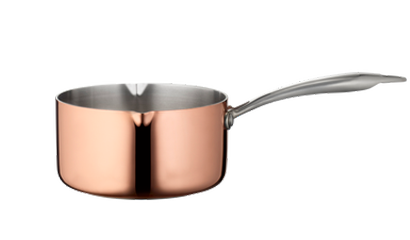

Copper saucepans stand out for two reasons: their appearance and the way they respond to heat. If you enjoy cooking that depends on close temperature control, this is a category worth looking at more carefully. Copper distributes heat quickly, which helps when you need to adjust the temperature without delay.
That can matter when tempering dark chocolate, which should not go above 55 degrees, or when making emulsified sauces that can split if they become hotter than 85 degrees. In everyday use, the quick heat response of copper gives you better control during the parts of cooking where timing and temperature affect the result.
This is also why many shoppers explore this category with a specific purpose in mind. Some are looking for a saucepan mainly for sauces, some for chocolate work, and others for smaller cooking tasks where a large pan is unnecessary. A practical way to choose is to begin with the task you want the pan to handle, then compare capacity, lid options and hob compatibility across the range.
If you want to broaden your search first, you can also look through our full selection of pots and pans. If you already know that a smaller pan is what you need, it can be useful to compare this page with our wider range of saucepans.
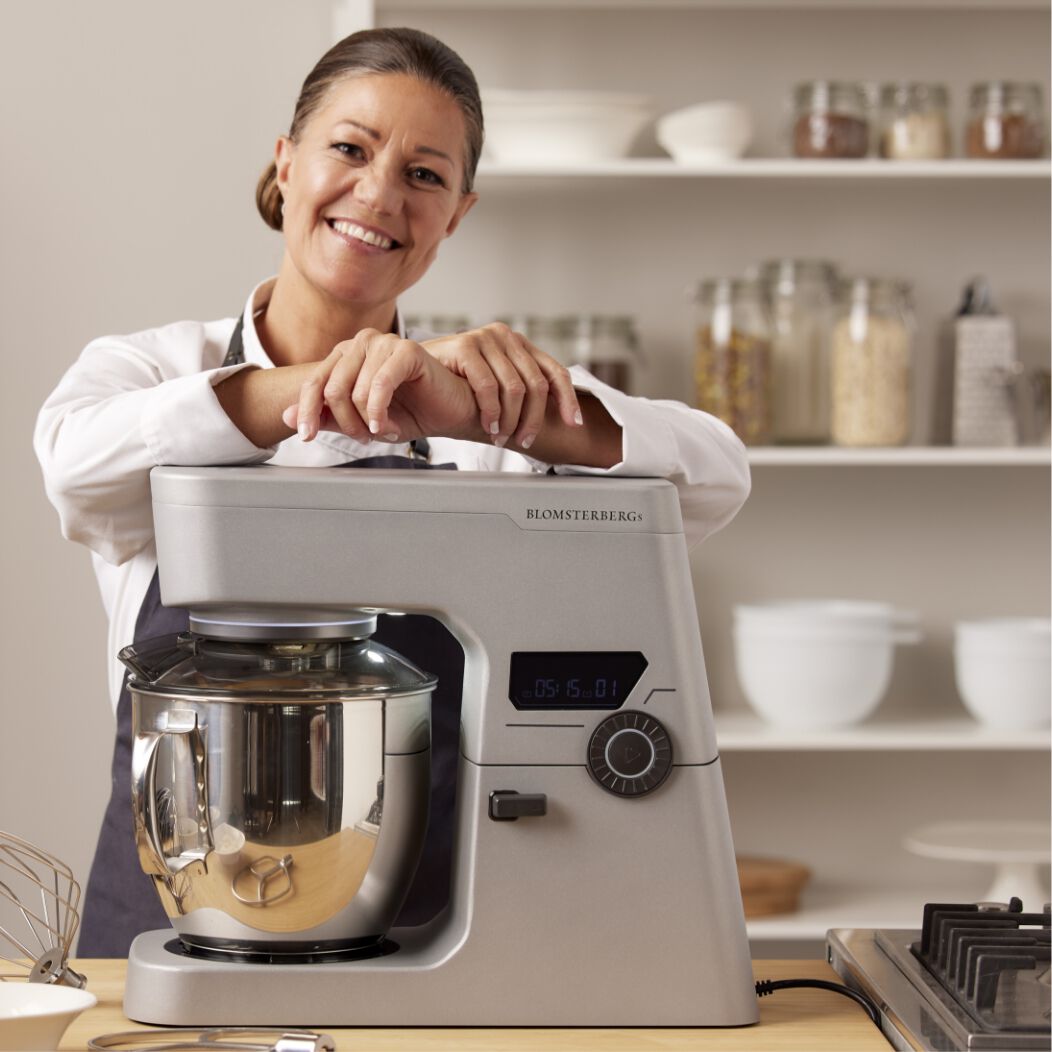
On this page you will find copper saucepans from Mauviel and Blomsterbergs. Mauviel is presented here as a French brand with a long history in kitchenware, while Blomsterbergs is developed by the experienced pastry chef Mette Blomsterberg. If you are comparing products, the brand can be one of the ways to narrow your choice alongside size and construction.
Many shoppers start with size because that is often the easiest way to filter the category. Copper saucepans are available here in several practical capacities, including 0.3 litre, 0.4 litre, 0.8 litre, 1.1 litre and 1.5 litre. These sizes make it easier to match the pan to the type of preparation you have in mind, whether you need a very small pan or a little more room.
For most situations, moving from size to details is a useful way to compare. Once you know the capacity you prefer, the next step is often to check whether a lid is included. Some sizes come with a lid, while others do not. If you specifically want a covered pan, you can compare this category with our range of saucepans with lids.
Because copper saucepans can vary in both capacity and construction, this category helps you make a more focused choice than a broader cookware page. Instead of comparing many different pan types at once, you can look only at the pans designed for this more precise kind of cooking.
This is one of the most important points to check before choosing copper saucepans. Classic saucepans made from pure copper cannot be used on induction, because the base is not magnetic. If you are using an induction hob, this detail matters before you decide on size or design.
Some copper saucepans are made with materials other than copper, which means your chosen pan may be suitable for induction. The practical way to confirm this is to check the induction symbol in the product information or on the packaging. That gives you a clear answer for the individual pan you are considering.
If induction compatibility is your main requirement, it can be helpful to compare this category with our selection of saucepans for induction. That makes it easier to move from a material-based choice to a hob-based choice, depending on what matters most in your kitchen.
For many shoppers, this is how the decision becomes simpler: first choose whether copper is the right material for your cooking style, then check whether the specific pan works with your hob. That process helps you avoid narrowing your choice too early.
If you choose a copper saucepan, proper cleaning and storage are an important part of keeping it in good condition. Copper is described here as more delicate than many other materials, so it helps to take more care with everyday maintenance.
Always wash the saucepan by hand with water and soap. Copper is a soft metal and does not tolerate the harsh environment of a dishwasher, which can scratch the surface.
Dry the saucepan thoroughly after washing. This is important because moisture can start oxidation, which can discolour the copper. The pan should be completely dry before you put it away.
Store copper away from sunlight, away from moisture and apart from other kitchen tools. Moisture can affect the shine, direct sun can fade the finish over time, and contact with other utensils can scratch the polished surface.
These points are useful when comparing materials as well. If you want cookware that requires more careful maintenance, copper may still be the right choice for its heat control and appearance. If easy-care handling is your first priority, this is worth bearing in mind while browsing.
Cleaning is the day-to-day part of care, while maintenance helps restore the look of the copper over time. With a copper polish, copper utensils can often be refreshed so they look good again.
Apply the polish to a soft sponge or cloth and rub the copper gently. Leave the product on the saucepan for a few minutes. Then rinse thoroughly with water and dry the pan carefully.
For shoppers comparing several copper options, maintenance can be part of the decision too. Some people choose copper primarily for temperature control, while others are equally interested in the finish and visual appeal. This category supports both kinds of comparison by bringing together pans in the same material, so you can focus on the details that matter most to you.
Copper saucepans are a specialist part of the cookware range, and that is what makes this category useful. Instead of looking through a mixed assortment, you can compare pans intended for precise cooking in one place. A sensible way to navigate is to start with capacity, then check whether a lid is included, and finally confirm whether the pan works on induction if that is relevant for you.
If you are still deciding between materials or pan types, it may help to step back and browse our broader selection of pots and pans or compare with all saucepans. If your main requirement is induction compatibility, our saucepans for induction provide a more targeted route. If you prefer a covered pan, you can continue to our saucepans with lids.
By comparing in this order, it becomes easier to narrow the range and find the copper saucepan that matches your cooking needs, your preferred size and the way you use your hob.
People often choose copper saucepans because copper responds quickly to heat and gives closer temperature control. In everyday use, this means that small temperature changes happen faster, which can help when making sauces, melting chocolate or handling other precise cooking tasks.
Copper saucepans are often used for tasks where heat control matters, such as emulsified sauces, chocolate work and smaller cooking jobs. In practice, this helps you use a pan that suits more precise preparations instead of reaching for a larger pan than you need.
A practical way to choose is to start with the task you want the pan to handle and then compare capacity. In everyday use, this makes it easier to decide whether you need a very small size such as 0.3 or 0.4 litre, or a larger option such as 1.1 or 1.5 litre.
No, some copper saucepans include a lid while others do not. In practice, this helps you narrow your options by checking the product details early if you know you want a covered pan.
Classic saucepans made from pure copper cannot be used on induction because the base is not magnetic. In practice, this means you need to check the product information or packaging for the induction symbol before choosing a specific pan.
A copper saucepan should be washed by hand with water and soap rather than put in the dishwasher. In everyday use, this helps reduce scratching, and it is also important to dry the pan thoroughly afterwards to limit oxidation and discolouration.
To refresh the finish, apply copper polish with a soft sponge or cloth, rub gently, leave it on for a few minutes, then rinse and dry the pan carefully. This makes it easier to restore the appearance of the copper over time as part of regular maintenance.
A sensible way to compare copper saucepans is to begin with capacity, then check whether a lid is included, and finally confirm hob compatibility if you use induction. In practice, this helps you move through the filtered choices in a clear order and avoid ruling out suitable pans too early.