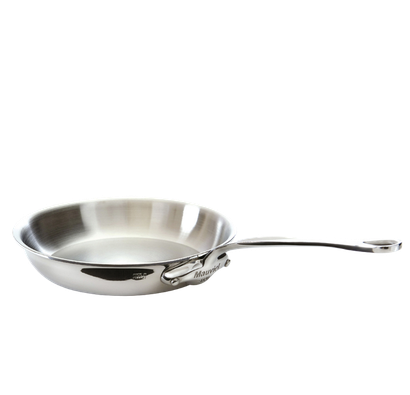
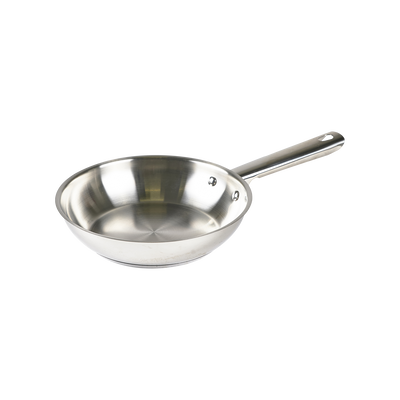
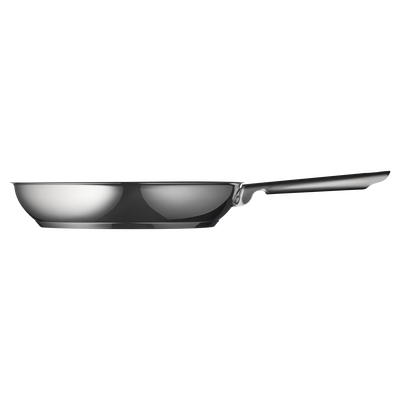
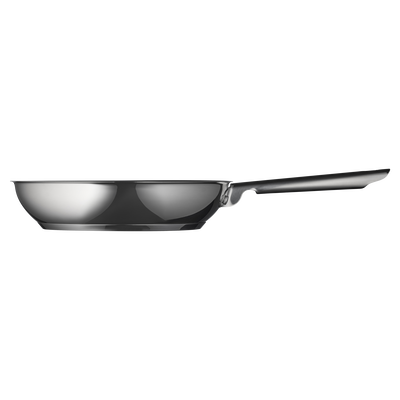
Stainless steel frying pans for everyday meals and more focused cooking
You do not need to be a professional cook to use a stainless steel frying pan. That is one of the practical strengths of this type of pan. It works just as well when you are making a quick dinner as when you want more control for a weekend meal.
You may have heard that stainless steel frying pans require a little technique, and that is true to some extent. At the same time, they are quick to learn. The more you use one, the easier it becomes to judge heat, fat and timing. In everyday use, that helps you get a pan that responds quickly, holds heat well and gives a proper seared surface.
On this page, you can compare pans from brands including Mauviel, Morsø, Pillivuyt Gourmet, Funktion and Blomsterbergs. That makes it easier to narrow your choice based on size, weight and the kind of cooking you do most often.
What is a stainless steel frying pan, and why choose one?
A stainless steel frying pan is typically made from stainless steel without a coating. That is what makes it different from coated pans. It is made without PFAS and other chemicals, and it can handle higher temperatures than traditional non-stick pans. For many people, that means better control when browning and frying, along with a pan that can be used for many years.
Once you get used to the basic technique, a stainless steel frying pan becomes straightforward to use. It heats up quickly, retains heat and supports cooking with good flavour and texture without making the process unnecessarily complicated.
Compared with coated frying pans, an uncoated frying pan is:
More heat resistant, so it can handle high heat without damage and is well suited to browning meat.
More durable, because there is no coating that can wear away or peel off.
More versatile, since it can be used on all heat sources, in the oven and even on the grill.
Suitable for everything from vegetables and eggs to steaks, fish and sauces.
With regular use, stainless steel frying pans develop a natural frying surface over time, often called seasoning. This can help reduce sticking, without a coating.
How to choose the right stainless steel frying pan
A practical way to choose is to start with how you actually cook. Size, weight and brand all matter, but they matter most in relation to your hob, your portions and the dishes you make most often. This category is therefore useful when you want to move from a broad choice to a more specific one.
Size: what suits your needs?
It can be tempting to choose the largest pan, but size should match both your hob and the amount of food you usually cook.
20 cm is a good choice for eggs, an omelette or one steak for one person. It is light and quick to heat.
24 cm is the classic all-round size. It suits 1-2 people and works well for both vegetables and meat.
28 cm gives you more room when cooking larger portions or frying several ingredients at once.
If a pan is too large for a small hob, the heat can become uneven. In most situations, it helps to choose according to both portion size and hob type.
Weight and cooking style
Stainless steel frying pans come in both lighter and heavier versions. The best choice depends on what feels right in your hand and what you want the pan to do.
Lighter models, such as those from Funktion and Morsø, are easier to handle, heat up quickly and work well for everyday meals and faster cooking.
Heavier models, such as Mauviel and Pillivuyt Gourmet, retain heat for longer, distribute it more evenly and are well suited to slower cooking, larger cuts and dishes where you are working with sauces or reductions.
If you typically want precision and stability, a heavier pan can be the better fit. If you prefer flexibility and lighter handling, a lighter model may suit you better.
Brands and what they offer
The range includes several brands, each with its own characteristics.
Pillivuyt Gourmet has a robust and timeless design intended for daily use and solid functionality.
Mauviel is described by its French elegance and very high quality.
Funktion and Blomsterbergs focus on practical design and ease of use, which makes them a good place to start for many users.
Morsø combines Danish design tradition with a modern expression in a functional and versatile format.
If you are comparing across brands, it can help to begin with the handling and weight you prefer, then look at size and intended use.
How to use and care for a stainless steel frying pan
Using a stainless steel frying pan is easier once you know a few basics.
Before frying
Preheat the pan for 1-2 minutes over medium-high heat. Add oil or fat and let it heat up until it sizzles lightly. Then add the food and leave it in place. When it is ready, it will release on its own.
Seasoning: a natural frying surface
Use and heat help build up a frying surface that becomes easier to work with over time. You can also give the pan a quick seasoning by heating oil in the pan, spreading it across the surface and letting it cool. Repeating this a few times helps create a smooth and neutral surface.
If food sticks or burns
Too much heat or too little fat is often the reason. Try preheating thoroughly, then add enough butter, oil or cooking fat before the food goes in. Let the pan do the work and adjust as you learn how it responds.
Cleaning and maintenance
Use only hot water and a washing-up brush. Avoid soap and the dishwasher. Dry the pan straight away and, if needed, add a little oil afterwards to help maintain the surface.
Compatibility
All stainless steel frying pans in this category can be used on induction, gas and ceramic hobs, as well as on the grill and in the oven.
Questions shoppers often compare before choosing
Many visitors begin with material, then compare by heat source or pan type. If you want to explore the wider range first, you can view all pots and pans or go directly to the full selection of frying pans.
If your main priority is hob compatibility, you can compare options for induction frying pans, frying pans for gas stoves and frying pans for ceramic cooktops. That can be a useful next step if you are deciding between several materials.
If you are still comparing materials, you can also look at non-stick pans for coated alternatives, hybrid pans for another type of frying surface, cast iron skillets if heat retention matters most, or copper pans if you want to compare heat distribution and control.
Some shoppers also prefer to compare single pans with frying pan sets before deciding. That can be helpful if you already know you need more than one size.
Stainless steel frying pans are a practical choice if you want one category where you can compare size, weight, brand and everyday handling in one place. From there, it becomes easier to find the pan that matches your cooking style and your kitchen setup.
Frequently asked questions
Why choose a stainless steel frying pan?
A stainless steel frying pan is uncoated, can handle high heat and is suitable for many different types of cooking. In everyday use, this means that you can use it for browning, frying and finishing dishes in the oven without relying on a non-stick coating.
Are stainless steel frying pans difficult to use?
They can require a little technique at first, especially with heat, fat and timing, but they are generally quick to learn. In practice, this helps you build confidence over time as the pan becomes easier to judge with regular use.
What size stainless steel frying pan should I choose?
The right size depends on your hob and the amount of food you usually cook. In everyday use, this means that a 20 cm pan suits smaller portions, 24 cm works well as an all-round option for 1–2 people, and 28 cm gives more space for larger meals or several ingredients at once.
What is the difference between a lighter and a heavier stainless steel frying pan?
Lighter pans are easier to handle and heat up quickly, while heavier pans tend to hold and spread heat more evenly. In practice, this helps you choose between faster everyday cooking and more stable heat for slower cooking, larger cuts or sauce-based dishes.
How do I stop food sticking in a stainless steel frying pan?
Preheating the pan properly and adding enough oil or fat are the main steps. This makes it easier to let the food cook undisturbed until it releases naturally, rather than trying to move it too early.
Do stainless steel frying pans need seasoning?
With regular use, stainless steel frying pans can build up a natural frying surface over time, often described as seasoning. In practice, this helps reduce sticking, and you can also encourage it by heating a little oil in the pan, spreading it over the surface and letting it cool.
How should I clean and care for a stainless steel frying pan?
The guidance here is to use hot water and a washing-up brush, avoid soap and the dishwasher, and dry the pan straight away. In everyday use, this helps maintain the surface, and a small amount of oil can be added afterwards if needed.
How can I narrow down the right stainless steel frying pan on a webshop?
A practical approach is to start with how you cook, then compare size, weight and brand based on your hob and the dishes you make most often. This makes it easier to move from broader browsing to more specific selections that match your kitchen setup and cooking style.