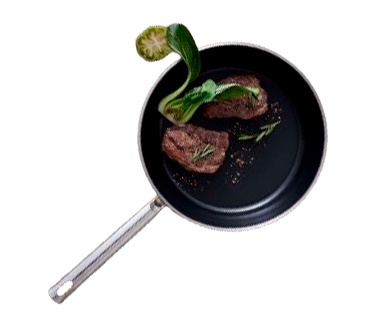

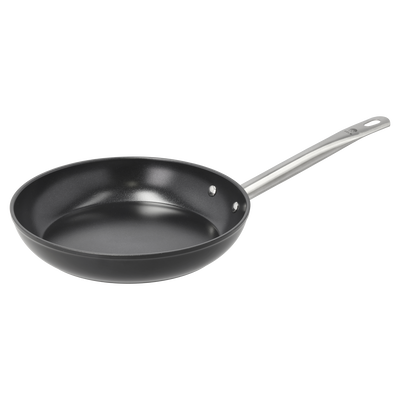
What are the benefits of a non-stick coating?
A non-stick pan makes it possible to cook with very little or no fat, which is helpful if you prefer lower-fat cooking. The smooth surface helps food release more easily, so both cooking and cleaning are simpler.
You can fry eggs, cook vegetables, brown meat and prepare many different dishes in a non-stick pan. In this category, you can compare pans from well-known brands, including Pillivuyt Gourmet, RÖSLE, HOLM and Mauviel, and focus on the features that matter most to you when choosing a pan.
If you want to compare this category with other options, you can also browse all frying pans in one place. For a broader overview of the full cookware range, see pots and pans.
3 practical tips for using a non-stick frying pan
If you have cooked on a non-stick pan before, you will know how smoothly vegetables and meat move across the surface, even without added fat. If you are new to this type of pan, a few simple habits can help you get better everyday use and keep the coating in good condition.
1. A non-stick pan works well for many cooking tasks
Non-stick pans offer good frying performance and can be used at low, medium and high heat. When you compare products in this category, it is useful to keep in mind that some non-stick pans do not tolerate very high temperatures, as this can damage the coating.
2. Hand washing helps care for the coating
A practical way to clean a non-stick pan is by hand with washing-up liquid and a sponge. This helps maintain both the pan and its coating over time. Because food releases more easily from the surface during cooking, cleaning is usually straightforward. In most cases, you only need to remove leftover fat and wash the pan with soap.
3. Store pans carefully to avoid scratches
Storage also matters. If pans rub against each other, the surface can be scratched. Ceramic coatings in particular can be damaged by scratching, so it helps to store pans with care. If you are building a practical pan collection, this is worth considering from the start.
Choose by hob type to narrow the selection
If you are unsure which pans work with your cooker or hob, one easy way to browse is by heat source. That helps you move from a broad category to the pans that match your kitchen setup. You can explore frying pans for ceramic cooktops, frying pans for gas stoves and induction frying pans. This kind of filtering makes it easier to compare only the pans that are relevant to your heat source.
Different types of coating in a non-stick pan
When you are looking for a non-stick pan, it helps to know that there are different kinds of coatings. In this selection, you will mainly find two coating types, and understanding the difference can make comparison easier.
Ceramic non-stick coating
Ceramic non-stick coatings are known for being durable and produced without harmful chemicals. You can often use ceramic non-stick pans on all heat sources. The ceramic coating is also often more resistant to scratches than many other non-stick coatings.
Enamel with a non-stick effect
Enamel-coated pans have a robust surface that resists scratches. The smooth enamel surface also makes cleaning easier, so the pan is quick to wash after use.
If you prefer a pan without coating that develops a natural non-stick effect over time, you can look at cast iron skillets. They are a useful alternative for frying, browning and braising.
Many of our frying pans are produced without PFAS
For many people, it matters that both ingredients and cookware are suitable for everyday cooking. That is why many shoppers specifically look for pans with coatings that are not produced with PFAS.
In this range, you will find many non-stick pans with coatings produced without PFAS. When you compare products, this can be one of the points that helps you narrow your choice, together with coating type, heat source and the kind of cooking you usually do.
FAQ about non-stick frying pans
Is ceramic coating toxic?
No, ceramic coating is not toxic. The ceramic-coated pans in our range are produced without PFAS and other harmful chemicals.
Is there a difference between non-stick and ceramic coating?
Yes. Ceramic coating is the material the pan is coated with, while non-stick describes the effect of the coating. In other words, a ceramic coating can provide a non-stick effect.
How do I cook with a non-stick pan?
You do not need to use fat on a non-stick frying pan, although you can if you prefer. A non-stick pan can be used like any other quality frying pan for most kitchen tasks. It is important not to use metal utensils on the pan, as they can damage the coating.
Explore related frying pan types and sets
Once you know that you want easy food release and simple cleaning, the next step is often to compare non-stick pans with other frying pan materials and formats. If you want to look beyond this category, you can also browse stainless steel frying pans, copper pans and hybrid pans. This makes it easier to compare coated and uncoated surfaces, different cleaning needs and different cooking characteristics within the same webshop journey.
If you need more than one size, it can also be practical to look at frying pan sets. These bring together different sizes and are also available in non-stick versions, making them relevant if you want both a smaller and a larger pan in the same range.
Frequently asked questions
What are the main benefits of non-stick pans?
Non-stick pans help food release more easily, so you can cook with very little or no fat if that suits your routine. In everyday use, this means frying eggs, vegetables or meat is simpler, and cleaning the pan afterwards usually takes less effort.
What can I cook in a non-stick pan?
A non-stick pan can be used for many everyday cooking tasks, including frying eggs, cooking vegetables and browning meat. In practice, this helps you use one pan for a range of simple meals without food sticking as easily to the surface.
How do I use a non-stick pan without damaging the coating?
It is helpful to avoid very high heat on pans that are not designed for it, as excessive temperatures can damage the coating. In everyday use, this means checking the pan's heat tolerance and avoiding metal utensils, which can scratch the surface.
How should I clean a non-stick pan?
A practical way to clean a non-stick pan is by hand with washing-up liquid and a sponge. This makes it easier to care for the coating over time, and because food usually releases well, you often only need to remove leftover fat and wash the pan gently.
How should I store non-stick pans to protect the surface?
It is best to store non-stick pans carefully so they do not rub against each other and become scratched. In practice, this helps you keep the coating in better condition, which is especially relevant for ceramic-coated pans.
How do I choose non-stick pans for my hob type?
If you are not sure which pan fits your kitchen, one simple way to choose is by heat source, such as ceramic cooktops, gas stoves or induction. This makes it easier to focus on filtered choices that match your hob instead of comparing every pan at once.
What is the difference between ceramic coating and a non-stick coating?
Ceramic coating refers to the material used on the pan, while non-stick describes the effect the surface gives during cooking. In practice, this helps you understand that a ceramic-coated pan can be one type of non-stick pan rather than a separate cooking function.
Are there non-stick pans made without PFAS?
Yes, many non-stick pans in this range have coatings produced without PFAS. This makes it easier to compare pans not only by coating type and heat source, but also by how the coating is made for everyday cooking preferences.