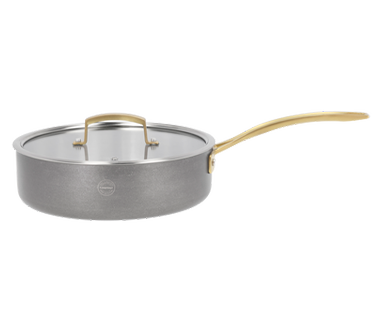
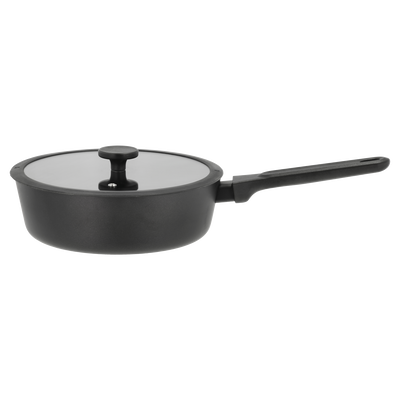
Whether you are an experienced cook or just getting started in the kitchen, a sauté pan is a practical addition to your cookware. A sauté pan is designed to distribute heat evenly, helping ingredients cook more uniformly. The high sides help keep food in the pan while you stir, and they also reduce splashes and spills.
At Kitchen Living Dining, the range includes sauté pans in different sizes and materials, making it easier to compare the options that suit your cooking style and the dishes you usually prepare.
A sauté pan is a versatile piece of cookware designed for a wide variety of dishes. It is defined by its high, straight sides and wide, flat base, which gives you a larger cooking surface and helps prevent ingredients from falling over the edge while stirring. This design makes a sauté pan suitable for frying, sautéing, simmering and braising.
Sauté pans are made in different materials, including stainless steel, non-stick, copper and cast iron. Each material has its own characteristics. Stainless steel is durable and easy to maintain, while non-stick coatings make cleaning easier and reduce the need for oil. In this category, you can compare pans by material first and then narrow your choice by size and other features.
The range also includes sauté pans suitable for different heat sources, including gas, electric, ceramic and induction hobs.
A sauté pan with a lid offers several practical advantages. When you cook with the lid on, it helps retain moisture from the ingredients, supports even cooking and can also reduce cooking time.
A well-fitting lid also helps reduce splashes and keeps the hob cleaner during cooking.
The lid makes the pan more versatile as well, as it allows you to start cooking on the hob and finish the dish in the oven.
A sauté pan can be used for many different kinds of cooking, which is why many people use it as an all-round pan in the kitchen. The shape is especially helpful when you need both surface area and higher sides in the same pan.
Typical uses include sautéed vegetables, where the high sides make it easier to stir at high heat without ingredients spilling out. The wide base is also useful for browning meat evenly, especially when preparing dishes that continue cooking afterwards.
For simmered dishes and stews, the high sides and lid make a sauté pan a practical option, as the ingredients can cook slowly in their own juices or in added liquid. The broad surface also works well for sauces and reductions, where faster evaporation can be helpful while the higher sides keep the contents contained.
Many people also use a saute pan for rice dishes such as risotto, where even heat distribution helps as the rice gradually absorbs liquid and flavour. Pasta dishes can also be prepared in this type of pan when ingredients need to be brought together quickly over higher heat.
Egg dishes such as frittata are another example, especially when the pan can go from hob to oven. The same applies to delicate fish and shellfish, where even cooking and a stable cooking surface can help keep ingredients intact.
When comparing sauté pans, it helps to start with a few practical questions: what type of cooking you do most often, how many portions you usually make, and which hob you use. From there, it becomes easier to sort by material, coating and size.
The material and coating affect heat distribution, cooking results and which heat source the pan can be used on.
Stainless steel is a very durable material with good heat distribution. It can take a little more practice to use if you are not familiar with it, and it often requires more fat or liquid during cooking.
Copper is a distinctive material often used by professional cooks. It offers a high degree of control over cooking and heat distribution, but it cannot be used on induction hobs.
Non-stick makes it possible to cook with very little or no fat and also makes the pan easier to clean. The non-stick coatings in the range are produced without PFAS.
Cast iron is versatile and highly durable. It retains heat well and can be used on almost all heat sources, from gas to open fire.
Carbon steel is a professional material that can handle very high temperatures and is lighter than cast iron.
If you are comparing similar cookware types, you can also explore frying pans in different materials and finishes. For broader cookware choices, you can also look at pots, saucepans and complete cookware sets.
The right size depends on how many people you usually cook for and what type of dishes you plan to make. A smaller pan of around 24 cm works well for smaller portions and quicker meals, while a larger pan of 28 to 30 cm gives you more room for bigger quantities. It is also worth looking at the height of the sides, as this affects how much food you can cook at once.
In this category, you can typically compare sizes such as 20 cm, 24 cm, 26 cm and 28 cm. A practical way to choose is to start with the size you are most likely to use day to day, then consider whether you also need extra capacity for larger dishes.
Design and brand can also play a part in your decision, especially if you want cookware that fits the rest of your kitchen. When browsing online, many shoppers first compare practical details such as material and size, then narrow the choice by preferred design or brand.
If you are building a wider cookware collection, it can also be useful to browse the full kitchenware selection and the main pots and pans category to compare how different pan types are used side by side.
Cleaning depends on the material and coating of the pan. Some sauté pans are dishwasher safe, while others should be washed by hand.
It is always a good idea to read the manufacturer's care instructions carefully so you can treat the pan correctly. This helps maintain the pan over time. It is also recommended to wash a new sauté pan before using it for the first time.
When shopping for a sauté pan, many people also compare other pan types depending on the dishes they cook most often. For high-heat stir-frying, you can browse wok pans. If you are looking for a pan made for very thin pancakes, see crêpe pans. For cooking directly on a ridged or flat surface, there are also grill pans and griddles.
Browsing these neighbouring categories can make it easier to decide whether a saute pan is the right match for your cooking, or whether you need another shape alongside it.
A sauté pan is used for several cooking methods, including frying, sautéing, simmering and braising. In everyday use, this means that one pan can handle everything from browned meat and vegetables to sauces, stews and rice dishes.
A sauté pan has high, straight sides and a wide, flat base, which gives you both cooking surface and extra depth. In practice, this helps you stir ingredients more easily without them falling over the edge, while still giving food room to brown evenly.
It helps to start with how you usually cook, how many portions you make and which hob you use. This makes it easier to compare filtered choices by material, coating and size so you can focus on the options that fit your everyday cooking.
Different materials suit different cooking styles. In practice, stainless steel is durable, non-stick is easier to clean and needs less oil, cast iron holds heat well, carbon steel handles very high heat, and copper gives a high level of heat control but is not suitable for induction hobs.
A lid helps retain moisture, supports even cooking and can reduce cooking time. In everyday use, this makes it easier to cook simmered dishes, reduce splashes on the hob and move some dishes from the hob to the oven.
The right size depends on how many people you usually cook for and the type of dish you want to make. In practice, a pan around 24 cm is useful for smaller portions, while 28 to 30 cm gives you more space for larger quantities and dishes that need extra room.
Sauté pans are made for different heat sources, and the range can include pans for gas, electric, ceramic and induction hobs. This makes it important to check the product details before choosing, so the pan matches the hob you use at home.
Cleaning depends on the material and coating, as some sauté pans are dishwasher safe while others should be washed by hand. In practice, this means it is best to read the manufacturer's care instructions carefully and wash a new pan before using it for the first time.