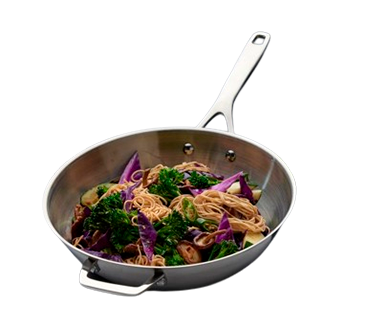
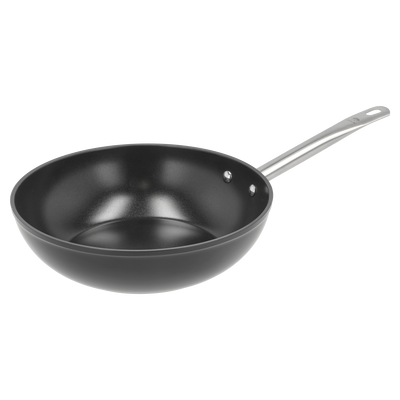
Cook authentic dishes at home with a wok pan
A wok pan is a useful piece of cookware when you want to stir-fry or quickly sear ingredients over high heat. Its rounded shape and tall, sloping sides make it easier to cook with movement in the pan, using only a small amount of oil.
Wok pans are widely used in Asian cooking for stir-fries, fried rice and noodle dishes. The quick cooking time helps vegetables keep their colour, while meat and other ingredients can be cooked quickly at high heat. A wok can also be used for steaming, braising, deep-frying and simmered dishes, so it covers more than one type of cooking in everyday use.
Whether you already cook regularly with a wok or are choosing one for the first time, this category helps you compare the main options before deciding. A practical way to choose is to start with size, then look at material, coating and whether the pan matches your hob or cooker.
The range includes wok pans in several sizes, models for all heat sources and options with lids, so you can narrow your choice according to how and where you cook.
Choose a wok pan without harmful chemicals
In this range, you will find wok pans both with and without coating. All wok pans with a non-stick coating are made without PFAS or other harmful chemicals.
What is a wok pan?
A wok pan is a pan with a rounded base and high, sloping sides, originally from Asian cooking. This shape is especially suited to fast cooking at high temperatures, where the ingredients are kept moving throughout cooking.
Wok pans are available in different materials, including carbon steel, aluminium, stainless steel and cast iron. Each material has its own qualities in terms of heat distribution and maintenance, which is often one of the first things shoppers compare when browsing the category.
What can you cook in a wok pan?
A wok pan is not only for stir-frying. It can also be used for steaming, braising, deep-frying and simmered dishes, which makes it a versatile pan for a wide range of recipes.
Stir-frying
Stir-frying is the most common use for a wok pan. The high heat and short cooking time help vegetables stay crisp and meat stay juicy. Typical ingredients include chicken, beef or pork with peppers, onions, broccoli, carrots and sauces such as soy sauce or oyster sauce.
Fried rice
Fried rice is a popular dish in Asian cooking, where cooked rice is quickly fried together with vegetables, egg and meat or seafood, then seasoned with soy sauce and other flavourings.
Noodle dishes
Fried noodles or lo mein can also be prepared in a wok pan by frying cooked noodles together with vegetables, meat and sauce.
Steaming
A wok pan can be used for steaming by placing a bamboo steamer or a metal rack above a small amount of boiling water in the bottom of the pan. This works well for fish, dumplings and vegetables.
Braising
Braising combines frying and simmering. First, the ingredients are browned quickly over high heat, then liquid is added and left to simmer at a lower temperature. This is useful for meat dishes that need time to become tender and full of flavour.
Deep-frying
A wok pan can also be used for deep-frying, as its shape helps keep the oil at a steady temperature. Examples include tempura prawns or fried chicken.
Simmered dishes
Because a wok pan has high sides, it can also be used for dishes that cook slowly in liquid, such as curry or stew.
Egg dishes
You can also use a wok pan for scrambled eggs, omelettes or egg-fried rice.
For many kitchens, that versatility is what makes a wok pan easy to compare with other pans. If you mainly cook quick weekday dishes, one style may suit you best. If you want a pan that can also steam, braise or fry more freely, another shape or material may be a better fit.
How do I clean my wok pan?
Some wok pans in the range are dishwasher safe, while others should be washed by hand. It is important to read the care instructions on the packaging so the pan is treated correctly.
It is also recommended to clean your wok pan before first use.
Choose the right wok pan for your heat source
When choosing a wok pan, it is important to consider your hob or cooker so you get the right performance and cooking result. For most situations, this is one of the most useful ways to narrow the range.
Wok pans for induction
Induction hobs require magnetic cookware. For that reason, a wok pan in a magnetic material such as carbon steel or cast iron is a suitable choice. Many modern wok pans also have a flat base, which provides better contact with the hob and helps heat transfer.
A wok pan for induction should also have a thick base that distributes heat evenly and helps reduce hot spots.
Wok pans for gas
Gas hobs and cookers are well suited to wok cooking because they provide direct and controllable heat, making it easier to reach the high temperatures needed for stir-frying.
For gas, a traditional rounded base can be a practical choice because it makes it easier to move ingredients around the pan. Carbon steel and cast iron are also suitable materials for gas, as they can handle high temperatures.
Wok pans for ceramic hobs
For ceramic hobs, choose a wok pan with a flat base so it sits properly on the surface and transfers heat efficiently. Materials such as stainless steel, aluminium and carbon steel can all work well, but it is best to avoid a rough or uneven base that may scratch the surface.
A non-stick coating can also be useful here, as it makes cleaning easier and helps reduce the risk of food sticking.
Compare wok pans and related cookware
If you are browsing more broadly, you can also explore the full kitchenware selection and the wider range of pots and pans. That can be a helpful next step if you want to compare a wok pan with other cookware types before making a final choice.
For example, some shoppers also look at saute pans when they want high sides for everyday cooking, or at frying pans for more classic pan cooking. If you are building a broader cookware collection, you may also want to view cookware sets, as well as individual pots and saucepans.
Other specialised pans can also be relevant depending on what you cook most often. Alongside wok pans, the category structure makes it easy to continue to grill pans and griddles for high-heat surface cooking or crepe pans for thinner batters and flat cooking surfaces.
Sizes and selection
In this category, you will find both smaller and larger wok pans. The range includes sizes such as 28 cm, 30 cm and 36 cm in diameter. Starting with size is often the easiest way to filter the selection, especially if you already know how much you typically cook at one time.
From there, you can compare coated and uncoated models, look at the material, and check which heat sources each pan is suitable for. That makes the category easy to use whether you are replacing an old wok pan or comparing different styles for the first time.
Frequently asked questions
What is a wok pan used for?
A wok pan is mainly used for fast cooking over high heat, especially for stir-fries, fried rice and noodle dishes. In everyday use, this means that you can cook ingredients quickly while keeping them moving, which helps vegetables stay crisp and meat cook evenly.
Can a wok pan be used for more than stir-frying?
Yes, a wok pan can also be used for steaming, braising, deep-frying and simmered dishes. In practice, this helps you use one pan for several cooking methods, including dumplings, curry, fried chicken or dishes that need both browning and simmering.
How do I choose the right wok pan size?
A practical way to start is by looking at the diameter and thinking about how much you usually cook at one time. In everyday use, this helps you narrow the filtered choices more quickly, with common sizes in this range including 28 cm, 30 cm and 36 cm.
What materials are wok pans made from?
Wok pans are available in materials such as carbon steel, aluminium, stainless steel and cast iron. In practice, this matters because different materials affect heat distribution and maintenance, which can make one option easier to live with depending on how you cook.
How do I choose a wok pan for my hob or cooker?
The main thing to check is whether the pan matches your heat source, as this affects how well it heats and how stable it sits. In everyday use, this means choosing magnetic cookware for induction, a flat base for ceramic hobs, and considering a traditional rounded base for gas if you want easier movement in the pan.
Are non-stick wok pans made without harmful chemicals?
According to the category information, all wok pans here with a non-stick coating are made without PFAS or other harmful chemicals. In practice, this helps you compare coated and uncoated options more clearly when deciding which type suits your cooking and cleaning preferences.
How should I clean a wok pan?
Some wok pans are dishwasher safe, while others need to be washed by hand, so it is important to follow the care instructions on the packaging. This makes it easier to care for the pan correctly, and it is also recommended to clean the wok pan before first use.
What should I compare when choosing between wok pans?
A useful starting point is to compare size, material, coating and whether the pan is suitable for your hob or cooker. In practice, this helps you move from a broad range to narrower options that fit the way you cook at home.