Clocks for walls and tables
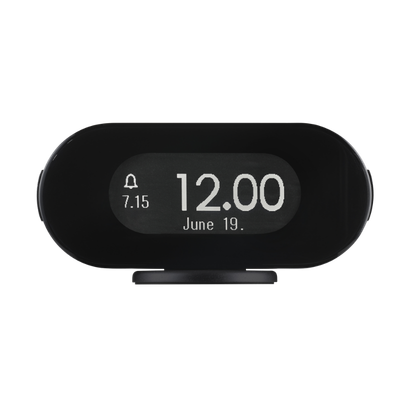
Wall- & Alarm Clocks brings together two closely related types of clock. Wall clocks are made to hang in clear view and often become a fixed part of the room’s overall look. They can take on a more noticeable role because they are seen from a distance and sit alongside other elements on the wall. Alarm clocks are smaller and are typically placed on a table, shelf or bedside table, where their format and position make them feel more immediate in everyday use.
The difference between these two types is therefore not only about size, but also about how they are used in the interior. A wall clock is often read as part of the wall surface, while an alarm clock sits among other smaller interior objects. When users explore this category on a webshop, the first practical step is often to decide whether the clock is meant for the wall or for a surface. From there, it becomes easier to compare which format suits the room and how visible the clock should be in relation to the surrounding decor.
Differences in look and placement
In this category, placement and visual weight are the main points that separate the products. A clock for the wall needs to work with the space around it, for example on an open wall area or as part of a larger arrangement with other decorative pieces. A smaller alarm clock stands closer to the things used every day and is often chosen for its compact and practical format.
That makes the category relevant across several rooms. Some clocks mainly act as interior details with a clearer visual role, while others take up less space and fit in as a more discreet element. A practical way to choose is to start with the setting. If the clock needs to be seen across the room, a wall clock is usually the natural option. If it will stand nearby on a shelf or table, an alarm clock often fits better because of its smaller scale. On a category page like this, that kind of comparison helps narrow the choice from a broader group of clocks to the type that matches the intended placement.
If you want to continue browsing related categories, you can move up to decor and interior for products in the same area of the home, or explore the wider selection within home decor. These broader categories are useful when the clock is only one part of a larger decorating project and you want to compare it with other interior pieces before deciding.
How wall clocks work in the room
Wall clocks are usually chosen with the wall itself in mind. Because they are mounted where they can be seen clearly, they affect how the wall is read as a whole. Some users look for a clock to fill a free section of wall, while others want it to sit as part of a more complete arrangement. In both cases, the important comparison is not only the clock on its own, but also how its size and placement relate to the objects around it.
For most situations, it helps to think of a wall clock as part of the visual structure of the room. It can hold its own on a more open wall, or it can sit beside other wall-mounted pieces without taking over the full composition. When browsing online, users often move between clock styles by asking how dominant the clock should be in the room and whether it will stand alone or be combined with other decorative categories.
If the clock is meant to be part of a wall arrangement, it can be useful to compare it with frames and posters or mirrors. Other wall-related options such as bulletin boards and accessories and hooks and coat racks can also help when comparing how different elements share the same wall space.
How alarm clocks fit among smaller interior items
Alarm clocks are different because they are generally placed much closer to the user. Instead of becoming part of a wider wall surface, they sit among smaller objects on tables, shelves or bedside tables. That changes how they are perceived in the room. Their compact format often makes them easier to integrate where there are already other interior pieces nearby, and the choice is often guided by how naturally they fit into that setting.
In everyday use, users browsing alarm clocks often compare them by looking at how much space they take up and how they sit with nearby items. Because they are placed on surfaces rather than walls, they are less about shaping the room from a distance and more about fitting into a smaller composition. This makes them relevant when the aim is to add a timepiece without giving it the same visual role as a wall clock.
For that type of placement, it can be natural to look at neighbouring categories such as vases, figurines and sculptures or decor. If the clock is being considered as part of a shelf or tabletop arrangement, users may also compare it with candlesticks and tealight holders, lanterns or dishes and bowls, depending on how the surface is being arranged.
Choosing within the category
Because Wall- & Alarm Clocks combines two related but clearly different placements, the category supports a step-by-step way of choosing. Users often begin with the broad purpose: is the clock meant to hang visibly as part of the room, or stand close at hand on a smaller surface? Once that has been decided, the next comparison becomes more precise. The user can focus on how prominent the clock should be, how much space it should take visually, and how it relates to the surrounding decor.
This way of browsing is especially helpful on a webshop, where products are often compared first by type and then by context. A wall clock and an alarm clock may both tell the time, but they answer different interior needs. Keeping those roles separate makes it easier to navigate the category and to avoid comparing products that belong in very different parts of the home. For users who are decorating a broader area rather than choosing a clock on its own, related categories such as flower pots and planters or storage baskets can help place the clock within a wider interior setting.
Seen as a whole, this category helps users move from general placement to more specific comparison. Wall clocks are usually assessed by how they work on the wall and how strongly they shape the room visually. Alarm clocks are more often assessed by their compact format and how they sit among smaller objects nearby. By using the category in that way, it becomes easier to find the type of clock that suits both the intended placement and the surrounding interior.
Frequently asked questions
How do I choose between a wall clock and an alarm clock?
A practical starting point is to decide whether the clock is meant for the wall or for a table, shelf or bedside table. In everyday use, this means that a wall clock is usually better when you want to read the time across the room, while an alarm clock is often more suitable when the clock will sit close at hand.
What is the main difference between wall clocks and alarm clocks?
The main difference is not only size, but also placement and how the clock works in the room. In practice, this helps you compare them by use: wall clocks become part of the wall surface, while alarm clocks sit among smaller interior objects on nearby surfaces.
When is a wall clock the better option?
A wall clock is usually the better option when the clock needs to be clearly visible and take part in the overall look of the wall. This makes it easier to choose a clock that works either on an open wall area or as part of a larger wall arrangement with other decorative pieces.
When does an alarm clock fit better in a room?
An alarm clock often fits better when you want a smaller clock placed on a shelf, table or bedside table rather than mounted on a wall. In everyday use, this means that it can sit more naturally among other nearby objects without taking the same visual role as a wall clock.
How should I think about placement when choosing a clock?
It helps to start with the setting and ask where the clock will actually be used and seen. In practice, this makes it easier to narrow your choice, because a clock viewed from across the room is usually chosen differently from one that will stand close by on a surface.
How do wall clocks work with other items on the wall?
Wall clocks are often chosen in relation to the space around them, not only on their own. In practice, this helps you judge whether the clock should stand alone on a more open wall or sit alongside items such as mirrors, frames or other wall-mounted pieces.
How do alarm clocks fit with other interior objects?
Alarm clocks are usually assessed by how much space they take up and how they sit with nearby items on a surface. This makes it easier to choose one that blends into a smaller arrangement with objects such as vases, candlesticks or other decorative pieces.
What is the easiest way to browse Wall- & Alarm Clocks on a webshop?
A simple way to browse is to begin with the broad purpose and then move to narrower options based on placement and visual role. In everyday use, this means you avoid comparing clocks meant for very different settings and can focus on the type that suits your room more clearly.