The biggest difference between sheets is how they sit on the mattress, and how much they move when you turn during the night. Once you know what separates the types, it also becomes easier to choose the right size, because the cut and fit affect how precise the measurements need to be.
A fitted sheet is sewn with corners, so it wraps around the mattress and stays smooth. It is often the straightforward choice for a mattress that is used every night, because the fabric is less likely to bunch up. A fitted sheet is also practical if you prefer to avoid having to straighten the sheet in the morning.
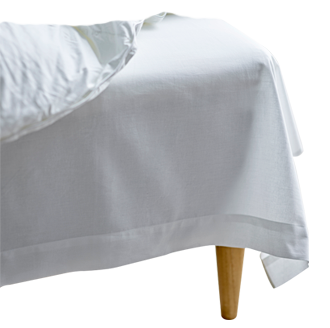
A box spring sheet is made to go down over the sides of the mattress with an edge all the way around. This can be an advantage if you have a mattress or topper that adds more height, or if you simply want a clearer, more defined finish along the sides. Always check both the mattress measurements and the height, so the edge can reach down and sit properly.
A flat sheet has no shape and no elastic. That gives you freedom to place it the way you like, and it can be a good option if you prefer a more classic solution. Flat sheets are also often used when you want the option to change how you make the bed, or if you want to use the same sheet across several mattress types.
The size of your sheet should, first and foremost, match the sleeping surface measurements of your mattress. When the dimensions fit, the sheet lies calmly and you avoid folds that can be felt during the night. On a webshop, a practical way to shop is to start with size, then narrow down by type (fitted, box spring or flat) once you know what will stay in place best on your bed.
A fitted sheet 90x200 is a classic size for a single bed. It fits many standard mattresses and is a size often used for a child’s room, a guest room, and everyday sleep for one person. If you want a shaped solution, you can choose a fitted sheet 90x200, which typically sits tighter around the mattress.
A fitted sheet 140x200 is often used for a wide single bed or a small double bed. It can be a good match if you sleep on your own but prefer a bit more space, or if 140 cm is simply the right bed width for you. If you want a fit that stays neat night after night, a fitted sheet 140x200 is a type many end up choosing.
For a standard double bed, a fitted sheet 180x200 is a typical choice. Here, the fit often matters even more, because two people in the bed create more movement in the fabric. A fitted sheet 180x200 is therefore relevant if you want to minimise the sheet shifting. Alternatively, a box spring sheet can be helpful if you prefer a more defined edge down over the sides.
Start by measuring the mattress, then choose the sheet type based on whether you want a shaped fit, an edge down the sides, or fabric that is completely free to fold. When both type and measurements match, you get bed sheets that lie neatly and feel comfortable to sleep on.
The right sheet is often the one that fits your everyday needs. If you move a lot during the night, share the bed with someone else, or simply want something that is easy to handle, the different sheet types offer slightly different advantages. When browsing online, many people compare options by thinking through: how much do I want to adjust the sheet, do I care about a crisp edge around the mattress, and do I want flexibility in how I make the bed?
A fitted sheet is typically the best match. The shaped corners help the sheet stay tight around the mattress, so in many cases you avoid smoothing it out again and again. It can be a good choice both for a single bed and as a sheet for a double bed, where there is often more movement.
A box spring sheet can give a firmer finish around the mattress because it is made to go down over the sides. It can be especially suitable if you prefer a sheet that, both visually and in everyday use, follows the mattress shape along the entire edge.
A flat sheet gives flexibility. It can be laid and folded the way you prefer, and some people like the feel of a sheet without elastic. It typically takes a bit more effort when making the bed, but the solution itself is simple and classic.
The material of a sheet mainly affects how it feels against the skin and how it behaves in use. Some sheets feel smoother, while others feel drier and firmer on the surface. If you are unsure, it can help to think about whether you prefer a sheet that feels light and crisp, or one that feels softer and calmer.
You often get a more consistent feel in bed when your sheet and bedding match well in both quality and overall look. If you are also looking for duvet covers and pillowcases, you can explore bedding and choose what suits your sheets and duvet.
Once you have the right sheet, it often makes sense to look at the other textiles around the bed and in the rest of your home. For the bedroom, a bedspread can bring the overall look together and make the bed easier to make. In the living room, or as an extra layer on the bed, throws and blankets can be practical, and cushions can add support and variation. For seating, chair cushions are a useful addition, and for the floor, rugs can make the room more comfortable to walk on.
If you want to see the full range of textiles together, you can continue to home textiles. If you prefer to browse by room and home styling more broadly, you will find more categories under home decor.
Check how the sheet sits on the mattress and how much it moves when you turn. A fitted sheet has sewn corners and stays smooth, a box spring sheet goes down over the sides with an edge, and a flat sheet has no elastic or shaped corners. In everyday use, this means a fitted sheet reduces the need to re‑straighten, a box spring sheet gives a defined finish for taller mattresses or toppers, and a flat sheet offers flexibility in how you make the bed.
Choose a size that matches the mattress sleeping surface measurements. A fitted sheet 90x200 is common for a single bed, 140x200 suits a wide single or small double, and 180x200 is typical for a double bed. In practice, measuring the mattress first helps you avoid folds and ensures the sheet lies calmly.
A box spring sheet is made to go down over the sides of the mattress with an edge all the way around. It can be an advantage if you have a mattress or topper that increases the height, because the edge can reach down and sit properly. In practice, always check both the mattress measurements and the height so the edge fits as intended.
A fitted sheet is cut with corners so it wraps around the mattress and stays smooth, while a flat sheet has no elastic or shaped corners. A fitted sheet is typically better if you move a lot during the night or share the bed, because it is less likely to bunch up. In everyday use, this makes it easier to avoid straightening the sheet each morning.
Yes, a flat sheet has no shaped corners and can be placed in many ways across different mattress types. It gives flexibility if you want to change how you make the bed or use the same sheet on several mattresses. In practice, this means you may need a bit more effort to keep the sheet neat when making the bed.
Start by choosing the correct size for your mattress, then narrow down by type—fitted, box spring or flat—once you know what will stay in place best. This approach helps you avoid buying a sheet that bunches or feels uneven. In practice, beginning with size makes it easier to find suitable, filtered choices.
Material mainly affects how the sheet feels against the skin and how it behaves in use; some feel smoother while others feel drier and firmer. Think about whether you prefer a light and crisp surface or a softer, calmer one. In everyday use, your choice of material helps determine the general feel of the bed and how comfortable you find it.