What is a hybrid pan, and why choose one?
A hybrid pan brings together two familiar pan qualities in one design: the easy food release of a non-stick surface and the solid build of stainless steel. That combination makes hybrid pans a practical choice if you want a pan that is easy to cook with while also giving good frying performance and durability.
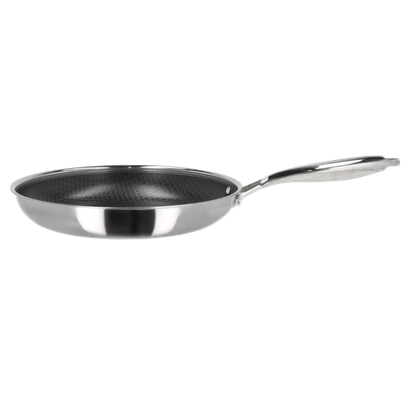
While some traditional pans focus mainly on browning and others mainly on easy cleaning, hybrid pans are designed to combine both. The construction typically includes a raised stainless steel pattern around a ceramic non-stick surface. This helps protect the coating and makes the pan more resistant to daily wear.
Many models are also made with a tri-ply construction of steel, aluminium and steel. This supports fast, even heat distribution across the pan, which is useful when you want more control while frying. All hybrid pans in this category are made without PFAS.
If you are comparing different types of cookware, you can also explore the full range of pots and pans or browse all frying pans to see how hybrid pans differ from other options.
Why hybrid technology is useful in the kitchen
When you choose a hybrid pan, you get a combination of features that can make everyday cooking easier to manage. Food releases more easily than in an uncoated pan, while the stainless steel structure helps protect the ceramic surface. At the same time, the pan is suitable for all hob types, including induction, and can also be used in the oven up to 240 to 260°C, depending on the model.
Most models can go in the dishwasher, although hand washing is recommended if you want to help preserve the coating for longer. You can also use metal utensils, but wood, plastic or silicone utensils are still recommended for gentler everyday use.
For many shoppers, hybrid pans sit between classic coated pans and more traditional metal pans. If you want to compare those differences more directly, it can be helpful to look at non-stick pans or stainless steel frying pans alongside this category.
How to choose the right hybrid pan
A practical way to choose is to start with size, then narrow your options by cooking style, materials and brand. This category makes that process easier by gathering different models in one place, so you can move from broad choices to more specific preferences.
Choose size by portion and purpose
Size is often the first thing most people compare:
20 cm works well for eggs, small pancakes or one portion of vegetables. 24 cm is a useful everyday size for smaller meals. 28 cm is the most popular all-round option and suits many daily cooking tasks. 32 cm is better if you often make larger portions or need more room for meat, wok-style dishes or sautéing.
Choose by what you cook most often
If you mainly cook eggs and vegetables, a hybrid pan with a ceramic non-stick surface is a practical choice. If you fry meat more often, it makes sense to look for models with strong heat distribution and good frying performance. If you want higher sides for tossing ingredients or cooking larger volumes, you may want to compare with a wok or sauté pan instead of a classic frying pan shape.
Choose by material details and features
When you compare models, it helps to look at the material combination. A ceramic coating gives the non-stick effect without PFAS. An aluminium core helps the pan respond quickly and distribute heat evenly. Stainless steel handles also matter, especially if oven use is important to you, as they support a more durable overall construction.
For most situations, this category is useful because it lets you compare these points side by side rather than looking only at one feature. That makes it easier to decide whether you need a small pan for quick everyday cooking, a larger all-round size, or a model that fits a more specific cooking style.
Hybrid pans from Morsø and Pillivuyt
This category includes hybrid pans from two selected brands: Morsø and Pillivuyt. Both offer hybrid construction, but with slightly different designs and handling, which helps when you want to compare not just size, but also feel and finish.
Morsø. 79Nord
Morsø is known for a distinctive design approach and strong functionality. The hybrid pans in the 79Nord series combine tri-ply construction with a ceramic coating and a satin-polished finish. The raised hybrid pattern is inspired by rings in the water around Mors and helps protect the non-stick effect from wear. These pans are suitable for all hob types, dishwasher safe and oven safe up to 260°C.
Pillivuyt. Paillon
Pillivuyt hybrid pans in the Paillon series have a more classic look and a professional functional focus. They combine a ceramic hybrid coating with a polished exterior and are oven safe up to 240°C. Hand washing is recommended for longer durability.
If brand is an important part of your decision, this gives you a simple way to compare a lighter satin-finish pan with a more classic and solid alternative within the same category.
Common questions when comparing hybrid pans
What is the difference between a hybrid pan and a regular non-stick pan?
The main difference is the protective raised steel structure over the coating. This makes the surface more durable and better suited to frying at higher heat than a standard non-stick pan.
Can I use a hybrid pan on induction and in the oven?
Yes. Hybrid pans in this category work on all hob types, including induction, and can typically be used in the oven up to 240 to 260°C, depending on the model. It is always a good idea to check the product instructions before oven use.
Can hybrid pans go in the dishwasher?
Most models can, but hand washing is recommended if you want to help maintain the coating over time.
Which size should I choose?
If you typically make small meals, 20 to 24 cm is often enough. A 28 cm pan is the standard all-round choice, while 32 cm is better for larger portions.
Compare hybrid pans with other pan types
If you are still narrowing down your options, it can help to compare hybrid pans with nearby categories in the webshop. For different materials, you can look at copper pans or a cast iron skillet. If you want several sizes together, you can browse frying pan sets.
You can also compare by hob type if that is the main way you shop. See frying pans for gas stoves, induction frying pans and frying pans for ceramic cooktops if you want to focus your comparison around your hob setup.
That makes this category a useful starting point if you already know you want the balance of non-stick convenience and stainless steel durability, but still want to refine your choice by size, brand, finish or cooking style.
Frequently asked questions
What is a hybrid pan?
A hybrid pan combines two familiar cooking features: the easier food release of a non-stick surface and the strength of stainless steel. In everyday use, this means you can cook with less sticking while still getting a pan that is designed for regular frying and daily wear.
How is a hybrid pan different from a regular non-stick pan?
The main difference is the raised stainless steel pattern that sits around the ceramic non-stick surface. In practice, this helps protect the coating and makes the pan better suited to higher-heat frying than a standard non-stick pan.
How do I choose the right size hybrid pan?
The best size depends on what and how much you usually cook. A 20 to 24 cm pan suits smaller meals, a 28 cm pan is a useful all-round choice, and a 32 cm pan gives more room for larger portions. This makes it easier to narrow your options by matching the pan size to your usual cooking habits.
Can I use a hybrid pan on induction and in the oven?
Yes, the hybrid pans described here are suitable for all hob types, including induction. They can also usually go in the oven up to 240 to 260°C, depending on the model, which helps if you want to start cooking on the hob and finish in the oven. It is still sensible to check the product instructions before oven use.
Can hybrid pans go in the dishwasher?
Most hybrid pans in this category can go in the dishwasher. In practice, hand washing is still recommended if you want to help preserve the coating for longer and keep the surface in better condition over time.
What should I look at when comparing hybrid pans?
It helps to compare size, cooking purpose, materials and brand. In everyday use, this means checking whether you need a smaller pan for quick meals, a larger pan for family portions, or details such as tri-ply construction, a ceramic coating and a stainless steel handle for oven use.
Are hybrid pans suitable for everyday cooking?
Yes, hybrid pans are designed to be practical for regular use because they combine easier food release with a durable stainless steel structure. This makes it easier to fry foods such as eggs, vegetables and meat with more control and with less sticking than an uncoated pan.
How can I compare hybrid pans with other pan types on a webshop?
A practical approach is to start with size and then compare narrower options by material, hob type or cooking style. In practice, this helps you decide whether a hybrid pan is the right fit, or whether you should also look at non-stick pans, stainless steel frying pans, wok-style pans or filtered choices for induction, gas or ceramic cooktops.