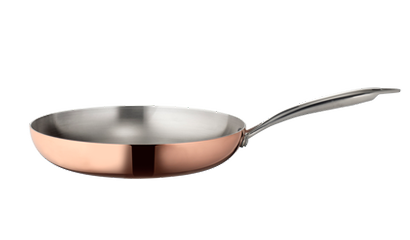
A copper pan stands out straight away, both in use and in appearance. It is more than just another piece of cookware. Copper is known for its strong heat conductivity, which is why many people choose it when they want close control during cooking. At the same time, the warm, polished finish gives the pan a distinctive look in the kitchen.
For many cooking tasks, the main reason to choose copper is responsiveness. When you turn the heat up or down, the pan reacts quickly. That makes copper pans especially useful for dishes where timing and temperature matter, and where you want the pan to follow your adjustments without delay.
Another important point is even heat distribution. Copper spreads heat well across the surface, which helps reduce hot and cool areas in the pan. If you are comparing materials on a webshop, this is one of the key differences to look at. Some shoppers start broadly in pots and pans, then move into frying pans before narrowing the choice by material. That route makes it easier to compare copper with other types and decide what fits your cooking best.
There are several practical reasons to explore this category:
Fast heat response: Copper reacts quickly when the heat changes. If you want a pan that follows your adjustments closely, this is one of the main strengths of copper.
Even cooking surface: The material distributes heat evenly, which helps with precise cooking across the whole pan.
Visual appeal: Copper pans also add a decorative element to the kitchen, whether they are in use, on a shelf, or hanging on display.
When browsing online, it often helps to begin with the material first and then compare size, hob compatibility and pan type. That way, you can move from a broad interest in copper to a more specific choice that suits your kitchen setup.
Traditional copper pans are often used on gas or ceramic hobs. Some models can also be used on induction, either because they are combined with other materials such as steel or by using an induction plate. If induction matters to you, it is important to check the product description or the pan packaging for the induction symbol before choosing.
If you are comparing by heat source rather than by material, that can be a practical way to narrow the range. You can continue to frying pans for gas stoves, frying pans for ceramic cooktops or induction frying pans. This makes it easier to see which pans match your hob first, and then compare the material options within that selection.
Copper pans are available in several practical sizes, including 16 cm, 20 cm, 26 cm, 28 cm and 30 cm. Size is one of the easiest ways to narrow your choice on a category page, especially if you already know the type of cooking you need the pan for.
A practical way to choose is to start with the size you use most often now. If you need a smaller pan for more focused cooking tasks, a compact size may be enough. If you want more surface area, looking at the larger sizes can help you compare your options more clearly. On a webshop, filtering by size after choosing material is often the simplest route to the right pan.
If you are replacing more than one pan, it can also be useful to compare single pans with frying pan sets. And if you are still deciding between materials, you may want to look at alternatives such as cast iron skillets, stainless steel frying pans, non-stick pans or hybrid pans. These category steps help you compare cooking feel, maintenance and compatibility before making a final choice.
Copper pans are chosen for both functionality and appearance, so correct care matters if you want to keep them in good condition over time. The basic routine is simple, but it helps preserve both the surface and the pan's finish.
Wash by hand with washing-up liquid: Clean the pan by hand using warm water and washing-up liquid. Use a soft sponge or cloth to help avoid scratching the surface.
Dry the pan straight after washing: Drying the pan immediately helps prevent water marks and helps maintain the shine of the metal.
Use copper polish when needed: If the pan develops marks or loses some of its natural shine, copper polish can be used to restore the finish. Apply a thin layer, polish gently and rinse with warm water.
Regular maintenance helps preserve both the look and the function of copper pans.
Avoid sharp utensils: Wooden, silicone or plastic utensils are a practical choice if you want to reduce the risk of scratches.
Store the pan in a dry place: Copper should be kept dry when not in use. Moisture over time can lead to oxidation and discolouration. It also helps to store the pan where it is less likely to be dented or scratched by other kitchen tools.
These points are often useful to keep in mind when comparing materials. Some shoppers focus mainly on cooking performance, while others also weigh how much care a pan needs. Looking at both aspects together makes it easier to choose a pan that suits your expectations.
When you browse copper pans online, the category works best as a step-by-step comparison. You can begin with the material, then move on to size, hob compatibility and other pan types if needed. This approach helps you avoid choosing too broadly and gives you a clearer overview of the differences that matter most.
If you are updating more of your cookware, you may start in the wider frying pan range and then compare copper with cast iron, stainless steel, non-stick or hybrid alternatives. If your choice depends mainly on your hob, moving through the heat source categories first can be the better route. And if you already know you want copper, size and compatibility are usually the quickest filters to use next.
Copper pans are a strong option for anyone looking for quick heat response, even heat distribution and a distinctive material finish. By comparing these pans with other frying pan categories and narrowing the selection by size and hob type, it becomes easier to find the model that matches your kitchen and the way you cook.
Many people choose copper pans because copper reacts quickly when the heat changes and distributes heat evenly across the cooking surface. In everyday use, this means that the pan follows your temperature adjustments closely, which can help when timing and control matter.
The main advantage is responsiveness. In practice, this helps you make quick heat adjustments without much delay, which is useful for cooking tasks where you want closer control over the pan.
Not always, as traditional copper pans are often used on gas or ceramic hobs, while some models can also work on induction. This makes it easier to choose correctly if you check the product description or packaging for the induction symbol before buying.
A practical way to choose is to start with the size you already use most often and then think about how much cooking surface you need. In everyday use, this helps you narrow the choice between smaller pans for focused tasks and larger pans when you want more room.
A copper pan should be washed by hand with warm water, washing-up liquid and a soft sponge or cloth. In practice, this helps you avoid scratching the surface, and drying the pan straight after washing also helps prevent water marks.
Regular care helps preserve both the finish and the condition of the pan. This means storing it in a dry place, avoiding sharp utensils and using copper polish when needed to restore some of the shine.
It often helps to compare the material first, then look at size, hob compatibility and pan type. This makes it easier to move from a broad interest in copper to narrower options that fit your kitchen setup and the way you cook.
You can start with copper as the material and then filter by size or by the type of hob you use. In practice, this helps you avoid choosing too broadly and gives you a clearer view of the filtered choices that match your needs.