Explore a wide range of saucepans from well-known brands
Copper, stainless steel or cast iron? Small, large or something in between? For boiling water, reheating leftovers or making sauces? A saucepan handles many everyday kitchen tasks and is often one of the most frequently used pieces of cookware on the hob.
If you are looking for a saucepan, this category gives you a clear overview of options for different needs. You can browse saucepans from brands including Blomsterbergs, By Tareq Taylor, Funktion, HOLM, Mauviel, Morsø, Pillivuyt Gourmet, Pyrex and RÖSLE. As you compare products, a practical way to choose is to start with size, then look at material, and finally check whether the saucepan matches your hob and any features you want, such as a lid.
If you want to explore the wider cookware range first, you can start in kitchenware and then continue to pots and pans. That makes it easier to compare saucepans with other types of cookware before deciding what fits your cooking best.
What is a saucepan?
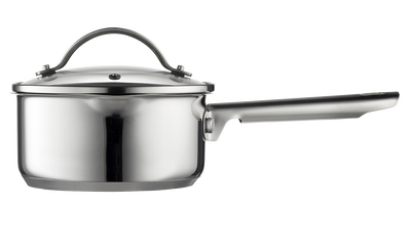
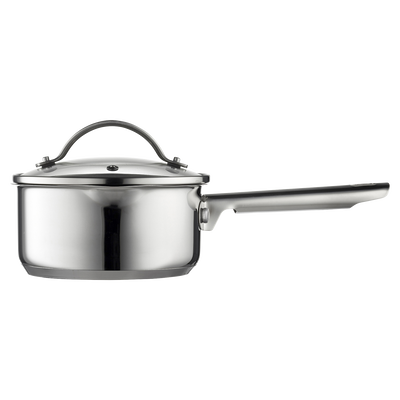
A saucepan is a small pot with one long handle, usually made of wood or steel. It is generally used for preparing smaller amounts of food.
In everyday use, a saucepan is useful for everything from porridge and homemade sauce to eggs and vegetables. The long handle makes it easier to pour off water, which is one reason many people choose a saucepan for smaller cooking tasks that need a bit more control.
What is the difference between a pot and a saucepan?
Both a pot and a saucepan are used for cooking food on a hob. The main difference is in the handles and the size.
A pot has two handles, while a saucepan has one long handle. A saucepan is also typically smaller than a pot because it is designed to be carried with one hand and should therefore be lighter and easier to move. If you often cook larger quantities, you may also want to compare with pots. If you are building a more complete setup, cookware sets can also be a relevant next step.
Which saucepan should I choose?
If you are considering a new saucepan, it helps to look at a few practical points before making your choice. On a webshop, the easiest way to narrow the selection is to think about what you mainly want to cook, how much you usually make at a time and which hob you use. From there, you can compare sizes, materials and specific variants in a more focused way.
Choose one or more sizes that suit your needs
Saucepans are available in very small versions holding around 0.40 litres and in larger family-friendly sizes holding up to 2.5 litres. That is a significant difference, so size is one of the first things worth deciding on.
If you mainly need a saucepan for sauces, eggs or reheating small portions, a compact size is often easier to handle. If you regularly cook vegetables, porridge or larger amounts of food, a bigger saucepan may be more suitable. For most situations, choosing by use first will make the rest of the comparison easier.
The material of your new saucepan affects how you cook
You can choose between saucepans made from different materials. Two of the materials often used for saucepans are stainless steel and copper, and each has its own strengths.
Stainless steel: Stainless steel saucepans are known for durability and versatility. They are well suited to everyday use because they are easy to maintain and can handle high temperatures. Stainless steel also supports even heat distribution, which helps with consistent cooking results. For many kitchens, it is a practical all-round choice.
Copper: If you want especially precise temperature control, copper saucepans are a strong option. Copper conducts heat very well, which makes it suitable for cooking that depends on close control of temperature, such as sauces and tempering chocolate. Copper does, however, require a little more maintenance if you want to keep its appearance.
A practical way to choose is to think about what matters most in your cooking: an everyday all-round saucepan or one that gives you more precise heat control. If that points you towards copper, you can browse copper saucepans directly.
Your new saucepan should match your hob
Most saucepans suit almost all heat sources, but if you have an induction hob, you need to make sure the base is magnetic so the saucepan works on induction.
Saucepans made from pure copper do not work on induction because they are not magnetic. That is why your hob type should be part of the comparison from the start, especially if you are choosing between different materials. On a category page, this is often one of the most useful ways to filter the range and avoid options that do not fit your kitchen.
Saucepans for induction
Induction is now a common heat source in many homes, and it is often chosen for its speed. Combined with the right saucepan, it works well for boiling water quickly and for reheating leftovers or sauce efficiently.
If induction compatibility is important to you, it makes sense to go straight to the relevant selection of saucepans for induction. That gives you a more direct overview when you want to compare only the models that suit your hob.
Copper saucepans
Copper saucepans are a good match for cooking where temperature control matters. They are particularly relevant if you make sauces or work with chocolate and want a material that responds quickly to changes in heat.
If you are specifically looking for this type of cookware, the category for copper saucepans makes comparison easier by gathering these options in one place.
Saucepans with lids
A saucepan with a lid can be useful when you want to heat food quickly and keep the heat in the pan. This can be an advantage when boiling eggs, cooking vegetables or heating other small dishes.
If a lid is an important feature for the way you cook, you can view the range of saucepans with lids. Filtering by that feature can make it easier to compare the options that fit your routine best.
Saucepans for sauces and other small dishes
If you want cookware that can be handled with one hand and used for many smaller tasks, a saucepan is a practical choice. It is suitable for sauces, boiling vegetables, dessert work and reheating food. The category helps you move from broad choices such as size and material to more specific needs such as induction compatibility, copper construction or a matching lid.
As you compare cookware, it can also help to look at nearby categories. For pan-based cooking, you can browse frying pans, saute pans, crepe pans, grill pans and griddles and wok pans. Looking across these categories can make the differences between cookware types clearer and help you decide when a saucepan is the right choice for the task.
Frequently asked questions
What is a saucepan used for?
A saucepan is typically used for smaller cooking tasks such as making sauces, boiling eggs, cooking vegetables or reheating leftovers. In everyday use, this means that it is a practical piece of cookware when you want good control and need to handle the pan with one hand.
What is the difference between a pot and a saucepan?
The main difference is that a pot usually has two handles, while a saucepan has one long handle and is normally smaller. In practice, this helps you lift and pour more easily when cooking smaller amounts of food.
How do I choose the right saucepan size?
It helps to think about what you usually cook and how much you make at one time. In everyday use, this means a small saucepan can suit sauces, eggs and reheating portions, while a larger one may be better for vegetables, porridge or family-sized cooking.
Should I choose a stainless steel or copper saucepan?
Stainless steel is often chosen for everyday cooking because it is durable, versatile and easy to maintain. Copper is useful when you want more precise temperature control, and in practice this helps you with tasks such as sauce making or working with chocolate.
Do all saucepans work on induction hobs?
No, a saucepan needs a magnetic base to work on induction. In practice, this means pure copper saucepans are not suitable for induction, so checking hob compatibility early makes it easier to compare the right options.
When is a saucepan with a lid useful?
A lid can be helpful when you want to keep heat in the pan and cook more efficiently. This makes it easier to boil eggs, cook vegetables or heat small dishes without losing as much heat during cooking.
What is the easiest way to choose a saucepan on a webshop?
A practical way to narrow your options is to start with size, then compare materials, and then check hob compatibility and features such as a lid. In practice, this helps you focus on filtered choices that match how you cook instead of comparing every saucepan at once.
Why would I choose a copper saucepan?
Copper responds quickly to changes in heat, which makes it especially useful when temperature control matters. In everyday use, this means it can be a sensible choice for sauces and other cooking where you want a more responsive material.