Champagne glasses for life’s special occasions
When the cork is popped, the mood often changes straight away. The bubbles rise, the glass catches the light, and the serving becomes part of the occasion. Champagne has a long history dating back to 17th-century France, where the sparkling wine we know today first took shape in the Champagne region. Since then, champagne has been closely linked with celebration, and the glass used to serve it has become part of that tradition.
A champagne glass is more than simply a piece of glassware. Its shape affects both presentation and enjoyment. Slim silhouettes help preserve the bubbles, while the bowl shape can influence how aromas are gathered. That is why many shoppers begin by looking at style, then move on to shape and size. On this page, you can compare different types of Champagne Glasses and decide which design best suits the way you want to serve sparkling wine.
When is champagne typically served?
For many homes, New Year is the most familiar champagne occasion. It suits the atmosphere of a festive evening and marks the shift from one year to the next. But champagne and other sparkling wines are also served for many other milestones, which is why the right glasses are often chosen for more than one annual celebration.
Anniversaries, milestone birthdays and graduation celebrations are all occasions where sparkling wine is a natural part of the table. It is also used for more spontaneous moments that deserve to be marked. Whatever the reason, the serving glass helps underline the occasion and creates a more considered table setting.
If you are browsing from the wider table setting range, this category makes it easier to move from general serving pieces to a more specific glass type for sparkling wine.
What types of champagne glasses are there?
Champagne is the protected name of the region in north-eastern France, but sparkling wine also comes from places such as Spain and Italy, where it is commonly known as cava or prosecco. Because sparkling wine varies, glass shapes do too. In this category, you can compare several different styles and see how each one changes the look and feel of the serving.
A practical way to choose is to start with the shape you prefer, then consider whether you want a more classic, decorative or versatile option. Below is an overview of the main types found in the range.
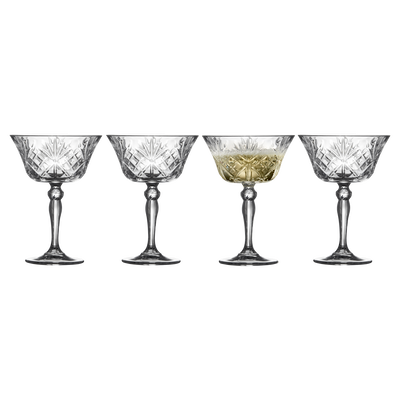
Champagne bowl
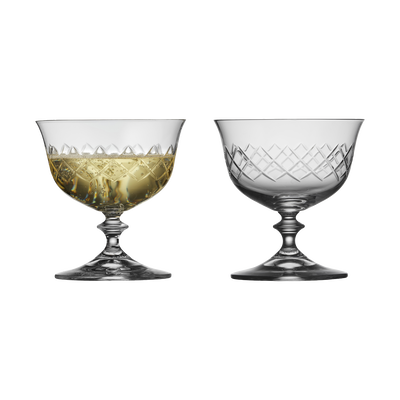
The champagne bowl has a broad, open shape that gives it a distinctly vintage expression. It is often associated with older serving traditions and an elegant, decorative table setting. If you prefer a more historical look, this type stands out clearly from narrower champagne glasses.
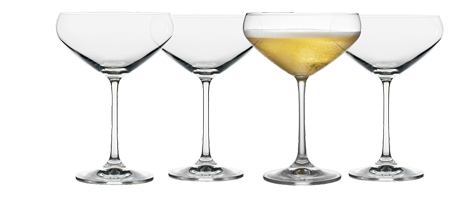
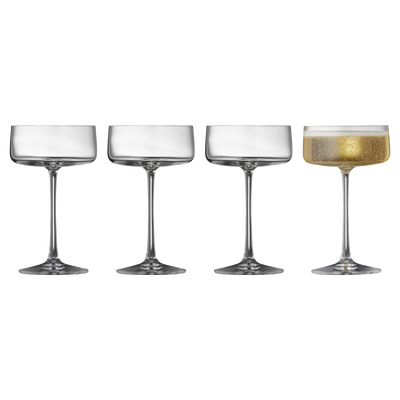
Coupe champagne glass
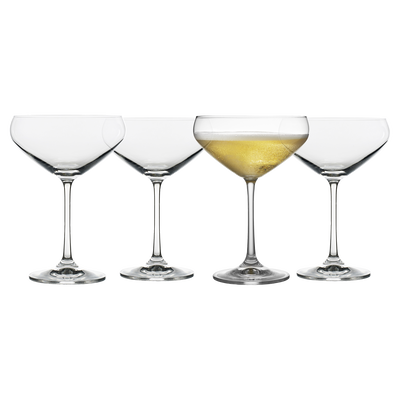
The coupe is a classic design with a rounded bowl on a slender stem. It has a timeless appearance and is often chosen for settings where style is just as important as function. If you are comparing shapes visually, the coupe is one of the easiest to recognise.
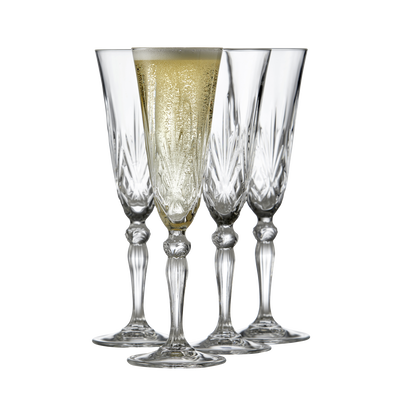
Flute champagne glass
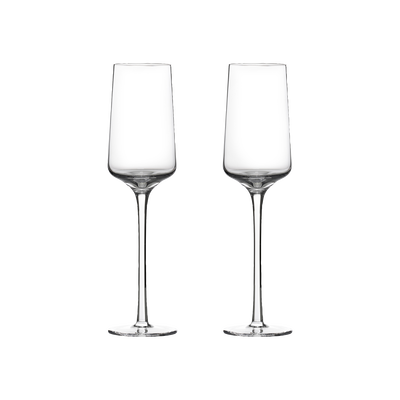
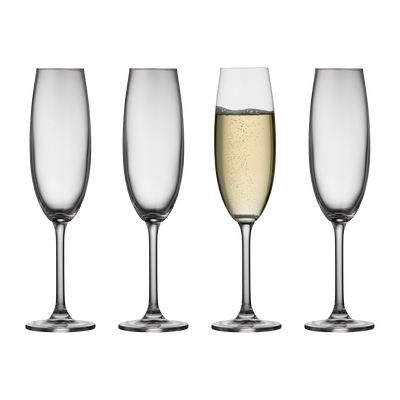
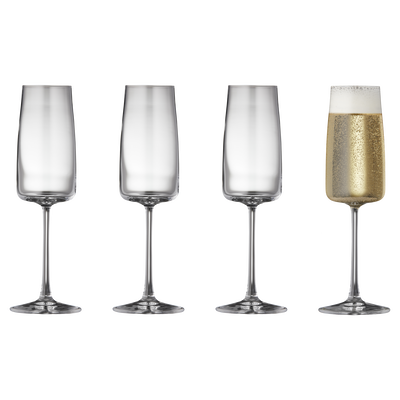
The flute has a long, narrow silhouette and is one of the most traditional choices. Its slim form helps the bubbles last longer, and the vertical shape also creates a clear visual effect as the bubbles rise through the glass. For many shoppers, this is the familiar starting point when looking for Champagne Glasses.
Tulip champagne glass
The tulip glass is another well-known shape. It is broader lower down and narrows towards the top, like a tulip head. This shape combines a refined appearance with a practical purpose, as it helps gather and highlight the aromas. If you want something between the narrow flute and a more open bowl, this is a useful style to compare.
Prosecco glasses
Prosecco and champagne are both sparkling wines, but they are not identical. A prosecco glass is designed with a roomier bowl that allows the fruity aromas and fine bubbles to come forward in a different way. If you serve more than one type of sparkling wine, it can help to compare these shapes side by side.
Coloured champagne glasses
If you want a more expressive table setting, colored glasses offer another direction. Coloured champagne glasses add a decorative element and can be a good option if you want the glass itself to play a stronger role on the table.
Champagne glasses from well-known brands
This range includes Champagne Glasses from recognised brands, with both classic and less conventional designs. When comparing brands, many shoppers look first at the shape language, then at decorative details and the overall expression of the glass.
Lyngby Glas champagne glasses
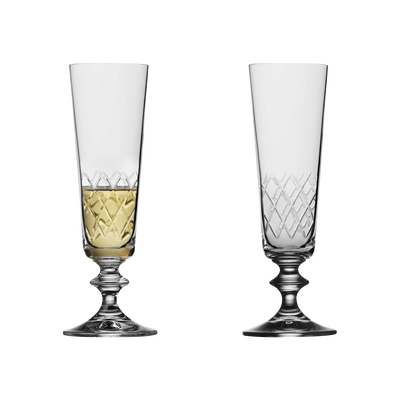
Lyngby Glas is known for elegant glass designs with a distinctive look. In the selection, the Melodia series stands out with its decorative pattern, which adds detail and character to the table setting. The series includes both champagne glasses and champagne bowls, making it easier to compare different serving styles within the same design line.
The Melodia series is made of crystal glass and is dishwasher safe, which can be useful when choosing glasses for repeated use at celebrations and gatherings.
Luigi Bormioli champagne glasses
Luigi Bormioli includes several types of champagne glasses in the range, including bowls, flutes and tulip glasses. This makes the brand useful to explore if you want to compare multiple shapes while keeping the overall brand style consistent. The glasses are clear and strong in expression, and the range gives a good overview of different ways to serve sparkling wine.
Remember the right champagne accessories
The overall experience of serving sparkling wine is shaped by more than taste alone. The setting, the presentation and the accessories all matter. If you are building a more complete serving setup, it can be helpful to look beyond the glass itself and consider the items used before the wine reaches the table.
Champagne sabre
A champagne sabre is used to open a bottle by removing the top with the correct technique. It is a more ceremonial way to open sparkling wine and is closely tied to festive presentation. It is important to understand the method properly before trying it.
Champagne cooler
A champagne cooler helps keep the bottle at the right serving temperature, especially on warm days. The ideal serving temperature for champagne is between 5 and 10 degrees, so cooling can be an important part of the experience. If you want to expand your serving setup beyond glasses, you can also explore wine glasses and related pieces in nearby categories.
Explore more glassware for everyday use and celebrations
If you are comparing categories across the webshop, champagne glasses are often just one part of a larger glassware selection. Depending on what you serve most often, it can be useful to continue to other categories and build a more complete overview. Alongside sparkling wine glasses, you can browse cocktail glasses, beer glasses, drinking glasses, dessert glasses and shot and schnapps glasses.
Looking across categories can make the decision easier if you want your tableware to work together visually, or if you are choosing different glass types at the same time. From the broader glassware range to more specific styles for sparkling wine, this category helps narrow the choice by shape, function and design expression.
Frequently asked questions
What is the difference between a flute, coupe and tulip champagne glass?
A flute is tall and narrow, which helps the bubbles last longer and makes the rising bubbles more visible. A coupe has a broad, rounded bowl with a more classic look, while a tulip glass is wider at the bottom and narrower at the top to help gather aromas. In practice, this helps you choose based on whether you prefer bubble retention, a decorative style or a shape that supports aroma.
How do I choose the right champagne glasses for my table setting?
A practical place to start is with the shape you prefer, then look at whether you want a classic, decorative or more versatile style. The category includes several narrower options, so you can compare how each glass changes the look and feel of serving sparkling wine. This makes it easier to match the glasses to both the occasion and the rest of your table setting.
Are prosecco glasses the same as champagne glasses?
No, the text explains that prosecco and champagne are both sparkling wines, but they are not identical. Prosecco glasses are described as having a roomier bowl, which allows fruity aromas and fine bubbles to come forward in a different way. In everyday use, this means that comparing the two shapes can help if you serve different types of sparkling wine.
When are champagne glasses usually used?
Champagne glasses are often used for New Year celebrations, but they also suit anniversaries, milestone birthdays and graduation gatherings. The text also notes that sparkling wine can be served for more spontaneous moments that deserve to be marked. In practice, this means the same glasses may be used for several different occasions throughout the year.
Why does the shape of a champagne glass matter?
The shape affects both how the drink looks and how it is enjoyed. Slim shapes help preserve bubbles, while the bowl shape can influence how aromas are gathered. This makes it easier to choose a glass that suits the way you want to serve sparkling wine, rather than choosing only by appearance.
What is a champagne bowl used for?
A champagne bowl has a broad, open shape and is linked in the text with a vintage expression and older serving traditions. It is often chosen when the visual style of the table is an important part of the occasion. In practice, this helps if you want a more decorative and historical look than a narrower champagne glass gives.
Are any champagne glasses in this range dishwasher safe?
The text specifically mentions that the Lyngby Glas Melodia series is made of crystal glass and is dishwasher safe. In everyday use, this means those glasses may be easier to manage when they are used repeatedly for celebrations and gatherings. Care details are only given for that named series in the category content.
What other items can be useful when serving champagne?
The category content highlights two related accessories: a champagne sabre and a champagne cooler. A sabre is used for a ceremonial way of opening a bottle, while a cooler helps keep champagne at the stated serving temperature of 5 to 10 degrees. In practice, this helps you think beyond the glass itself when putting together a serving setup for sparkling wine.