

Where does Lion Sabatier come from?
Coutel’Innov was founded in 1852 in Thiers, France, and took over the production of Lion Sabatier in 1991. Thiers has been the centre of knife production in France for more than 500 years and is home to several Sabatier factories. They all produce knives, but with different levels of quality.
Lion Sabatier was registered as the first Sabatier brand as early as 1812. The lion, featured in both the brand name and logo, symbolises strength, agility and superiority. Lion Sabatier is the only brand permitted to use the lion as its symbol. The brand remains closely associated with the long tradition of knife making in Thiers, where experience and established production methods continue to shape the range. This heritage helps explain why many cooks choose to compare the different series before selecting a knife that suits their preferred style of food preparation and everyday use.
Why choose knives from Lion Sabatier?
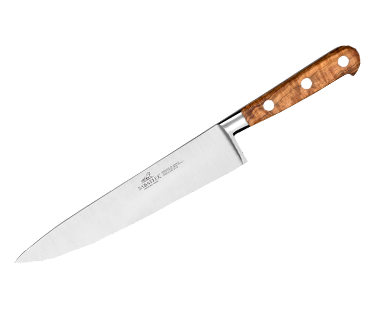
Lion Sabatier kitchen knives are made to cover a wide range of kitchen tasks. Parts of the long production process are still carried out by hand, resulting in knives recognised for their craftsmanship. The assortment includes bread knives, filleting knives, fish knives, carving knives, chef's knives, Santoku knives, steak knives, carving forks, tomato knives, paring knives and more. If you are comparing several options, Kitchen Living Dining makes it easy to browse the wider brands selection before focusing on Lion Sabatier.
The knives are designed with balanced weight and feel comfortable in the hand during extended food preparation. Their stainless steel blades are highly resistant to corrosion and other influences, allowing them to cut through even firm ingredients efficiently. Lion Sabatier divides its products into different series, each with its own characteristics. You can compare individual knives or choose Lion Sabatier products as complete sets in several sizes. Whether you prepare simple everyday meals or more detailed recipes, different blade shapes and sizes are intended for different cutting tasks. Comparing the available options can help you choose a knife that matches the ingredients you use most often and the techniques you prefer.
Many home cooks choose to build a collection gradually, starting with an all-purpose chef's knife or a small paring knife before adding specialist knives for bread, meat or vegetables. Others may prefer a coordinated knife set that provides several commonly used knife types together. The available range makes it easier to compare these approaches and select the combination that best suits your kitchen routine.
Knife accessories from Lion Sabatier
High-quality knives benefit from suitable accessories. Alongside kitchen knives, Lion Sabatier also offers knife blocks, magnetic knife racks, honing steels and whetstones. Choosing the right accessories helps you organise your knives and select the maintenance products that match the way you use them. Keeping knives stored correctly and maintaining the cutting edge regularly can also make everyday food preparation more consistent. Selecting accessories that fit the number and type of knives you own helps create an organised workspace.
Storing your kitchen knives
Proper storage helps keep quality knives organised. Knife blocks sit neatly on the worktop and provide a practical and secure place for everyday storage. Magnetic knife racks keep knives visible, easy to reach and help save space on the kitchen counter. Storing knives separately rather than loose in a drawer also helps protect the blade edge from unnecessary contact with other utensils. Choosing a storage solution depends on the available space and how you prefer to organise your kitchen.
Maintaining your kitchen knives
Regular maintenance helps keep your knives performing well. A honing steel can be used three to four times each month to maintain the edge. If a knife becomes dull, it can be sharpened on a whetstone. Using a whetstone around twice a year is recommended to keep knives sharp and effective. Cleaning knives after use and storing them carefully can also help preserve their condition over time. Regular care makes it easier to maintain consistent cutting performance during everyday cooking tasks.
Explore more brands at Kitchen Living Dining
If you would like to compare Lion Sabatier with other collections, you can also explore Alfi, Bamix, Bastian, Beast, Bernddes, BITZ, Blomsterbergs, Casafina, Celebrate, Coast, Colormix, Costa Nova, Epicurean, Funktion, Gense, HOLM, Hoptimist, Jacob Jensen, Leifheit, Leifheit, Luigi Bormioli, Lyngby Glas, Martin Schwartz, Mauviel, Medusa Copenhagen, Mepal, Moments of Play, Nordic Sense, Pillivuyt Gourmet, Pillivuyt, RÖSLE, Rosti, Södahl, Soehnle, Still, Tareq Taylor, Thermos, Tiger, Villa Collection, Xplore It and Zone Denmark.
Frequently asked questions
Where do Lion Sabatier knives come from?
Lion Sabatier is closely associated with Thiers in France, a town with more than 500 years of knife-making history. Coutel'Innov, founded in 1852, took over production of Lion Sabatier in 1991. In everyday use, this means the knives continue to be produced within a long-established knife-making tradition.
Why are there different Lion Sabatier knife series?
Lion Sabatier divides its products into different series, each with its own characteristics. In practice, this helps you compare features and choose a knife that suits the ingredients you prepare most often and the cutting techniques you prefer.
How do I choose the right Lion Sabatier knife?
Different blade shapes and sizes are intended for different kitchen tasks, such as slicing bread, preparing vegetables or carving meat. In everyday use, this makes it easier to match the knife to the type of food you prepare regularly.
Should I buy a single Lion Sabatier knife or a knife set?
Some people start with a versatile chef's knife or a small paring knife and add specialist knives over time, while others prefer a coordinated knife set. In practice, this helps you choose an option that fits your cooking routine and the range of tasks you carry out.
What accessories can be used with Lion Sabatier knives?
Lion Sabatier also offers accessories such as knife blocks, magnetic knife racks, honing steels and whetstones. In everyday use, this helps you store your knives safely and maintain the cutting edge as part of regular care.
What is the best way to store Lion Sabatier kitchen knives?
Knife blocks and magnetic knife racks are both suitable storage options because they keep knives organised and separate from other utensils. In practice, this helps protect the blade edge from unnecessary contact and makes the knives easier to access when cooking.
How should I maintain Lion Sabatier knives?
Regular honing helps maintain the edge, while a whetstone can be used if the knife becomes dull. The category content recommends using a honing steel three to four times each month and a whetstone around twice a year. In everyday use, this helps keep cutting performance consistent.