Why use a humidifier?
A healthy indoor climate depends on balanced humidity, and this is often more important than many people realise. When the air in your home is too dry, it can lead to irritated airways and worsened allergy symptoms. Adding moisture to the air can help reduce these effects and make breathing feel more comfortable.
At the same time, it is important not to add moisture if the humidity in your home is already high. The goal is to find the right balance, so the air is neither too dry nor too damp. If your home has excess moisture, the better choice is to look at air purifiers and dehumidifiers instead.
If you are unsure how to manage the humidity level in your home, it helps to look at the situation step by step. This category is designed to help you compare humidifiers by function and by how much control you want over the moisture level in different rooms.
Improve your indoor climate and notice the difference
The air around us is always changing, and many factors affect how much moisture it contains. That also applies indoors, where the season, your location near the coast or in a city, and other conditions all influence the humidity in the air.
Most experts recommend that the relative humidity in the home should be between 25 and 60%. If your home does not stay within that range, the next step is to identify whether the air is too dry, balanced, or too humid. That makes it easier to move from a broad category view to the product type that fits your situation.
Low humidity. What should I do?
Low humidity is especially common during the winter months. Heating systems run more often, and daily airing may be reduced when the outdoor air is cold. The result can be dry indoor air, which may be felt as typical winter discomforts such as a sore throat.
A humidifier is intended for this situation. It adds moisture to the air in the form of cool mist or steam, helping to make the room feel more comfortable again. If you are browsing this category because the air in your home feels dry, a practical way to choose is to start with the rooms where you notice the problem most and then compare models by the features they offer.
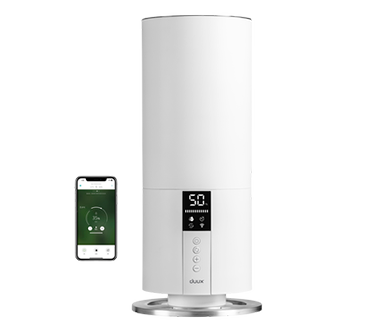
If you are unsure about the humidity level in your home, a humidifier with a hygrometer can be a helpful option. It monitors the moisture level and adjusts as needed. You can also keep track of conditions indoors and outdoors with thermometers and weather stations available from our wider Home Care range.
Normal humidity. How do I maintain a good balance?
Many homes already have a suitable humidity level, where there is no need to remove moisture or add more. Even so, humidity can change during the year and from room to room. If you want to maintain a stable level, it can be useful to choose a humidifier with a built-in hygrometer that monitors the air and activates when needed.
For most situations, this is a simple way to avoid making the air too dry or too damp. When comparing products in this category, it can therefore make sense to focus not only on whether a humidifier adds moisture, but also on how it helps you keep that balance over time.
High humidity. What should I do?
If your home already has high humidity, a humidifier is not the right solution. In that case, you should not add more moisture to the air. Instead, you may need a dehumidifier, which you can find under air purifiers and dehumidifiers.
Another option mentioned in this context is to use heating that warms the room and helps dry it out. You can explore suitable options under heater fans and runtal radiators.
If you are looking more broadly at products for indoor conditions, you can also continue to our climate and ventilation category, where humidifiers are part of a wider selection for managing the air in your home.
Which humidifier should I choose?
When choosing a humidifier, there are a few practical points to consider. The humidifiers in this category convert water into cool mist or steam, and the range includes different functions that can help improve humidity in both small and large rooms. A useful way to compare them is to begin with your room size and your current humidity level, then look at the type of control each model offers.
What does a humidifier do?
A humidifier is a machine designed to increase the humidity level in the air at home. It does this by releasing water vapour or fine water particles into the air. This helps reduce the effects of dry air and supports a more comfortable indoor climate.
When you shop this category online, that basic function is the starting point. From there, you can compare whether you prefer a simpler model or one with extra control features such as a hygrometer. This makes it easier to narrow your choice according to how closely you want the humidity level to be monitored.
What is the difference between a humidifier and an air purifier?
The main difference between a humidifier and an air purifier is their primary purpose. A humidifier is used to increase the moisture level in the air. An air purifier is designed to remove pollutants such as dust, pollen, smoke and bacteria from the air.
An air purifier works by drawing air through filters that capture and remove harmful particles, resulting in cleaner air to breathe. If you are comparing products for overall indoor comfort, it helps to separate these functions clearly. Choose a humidifier when the air is too dry, and compare air purifiers when the focus is airborne particles. If warmer periods are also part of your decision, you can also view fans and air conditioning as another part of the wider climate range.
How to explore this category
If you are deciding between several humidifiers, it helps to move from general needs to more specific features. Start by asking whether your home has low, balanced or high humidity. If the air is dry, a humidifier may be the right fit. Then look at whether you want a model that simply adds moisture or one that also monitors the level automatically with a hygrometer.
It can also help to think about where in the home the humidifier will be used. Some users begin by looking for a humidifier for a smaller room, while others need something suitable for larger spaces. By comparing products according to room size, humidity control and output type, the category becomes easier to navigate and the differences between models become clearer.
If you are still comparing broader product types, you can move between humidifiers and other indoor climate solutions through our climate and ventilation selection, or return to the full Home Care overview to continue browsing related categories.
Humidifiers for dry indoor air
This category brings together humidifiers for homes where the air needs more moisture. Whether you are comparing models for seasonal dryness or looking for a unit that helps maintain a steady balance throughout the year, the range is organised to help you move from a general need to the features that matter most for your home.
You can compare humidifiers by how they add moisture, by whether they include a hygrometer, and by how well they suit smaller or larger rooms. That makes it easier to choose a model that matches your indoor conditions and your preferred level of day-to-day control.
Frequently asked questions
When should I use a humidifier?
You should use a humidifier when the air in your home is too dry, which is often more noticeable in winter when heating is used more often. In everyday use, this means that if dry air is causing discomfort such as a sore throat or irritated airways, a humidifier can help add moisture and make the room feel more comfortable.
What humidity level is usually recommended at home?
Most experts recommend keeping relative humidity in the home between 25 and 60%. In practice, this helps you judge whether the air is too dry, balanced, or too humid before choosing a humidifier or looking at another indoor climate solution.
What should I do if the humidity in my home is already high?
If the humidity in your home is already high, a humidifier is not the right choice because it adds more moisture to the air. In practice, this means that a dehumidifier may be more suitable, and some people also look at heating options that help dry the room out.
How do I choose the right humidifier for my home?
A practical way to choose is to start with your room size and your current humidity level, then compare models by how much control they offer. This makes it easier to narrow your filtered choices between a simpler humidifier and one with features such as automatic humidity monitoring.
What does a humidifier with a hygrometer do?
A humidifier with a hygrometer monitors the moisture level in the air and adjusts as needed. In everyday use, this helps you maintain a more stable indoor balance and makes it easier to avoid adding too much or too little moisture.
What is the difference between a humidifier and an air purifier?
A humidifier is used to increase the moisture level in the air, while an air purifier is designed to remove pollutants such as dust, pollen, smoke and bacteria. In practice, this helps you choose more clearly: a humidifier suits dry air, while an air purifier suits concerns about airborne particles.
How can I compare humidifiers more easily when shopping online?
It helps to begin with your general need and then move to narrower options such as room size, output type, and humidity control. This makes it easier to compare models step by step instead of trying to decide between all humidifiers at once.
Can I use a humidifier if the humidity in my home is already normal?
Yes, but it is most useful if you want help maintaining a stable level rather than adding moisture all the time. In everyday use, this means a model with a built-in hygrometer can activate when needed and help keep conditions balanced over time.