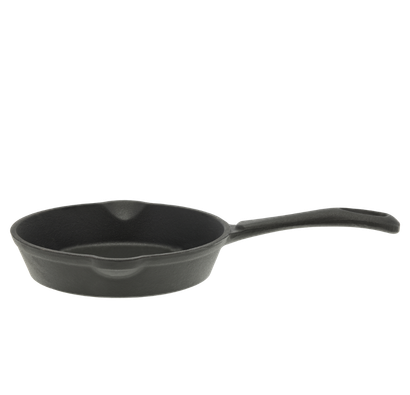
If you have cooked with a cast iron skillet before, you will already know many of the qualities that make these sturdy frying pans such a reliable choice. The heavy iron holds heat well, which supports even cooking and also helps keep food warm after cooking. With the right care, a cast iron skillet can last for generations. Another reason many people choose cast iron is its flexibility, as it can be used on almost all heat sources, from gas and induction to the oven and open fire. If you use it over an open fire, the outside of the pan may become blackened by soot.
For many shoppers, the main question is not whether cast iron is useful, but which type and size will suit their cooking best. In this category, you can compare several practical formats, from smaller pans to larger models for different cooking tasks. The range includes examples such as a 10 cm mini pan, a 24 cm sauté pan, a classic 26 cm cast iron skillet, a 28 cm grill pan, a 36 cm wok pan and a 36 cm paella pan in carbon steel. If you want to browse more broadly before choosing, you can also explore pots and pans or go directly to the full selection of frying pans.
A practical way to choose is to start with the cooking job you want the pan to handle most often. Some prefer a classic frying pan shape for general browning and frying, while others look for a grill surface, a sauté shape or a wider pan for larger portions. Looking at shape, diameter and pan type helps to narrow the options in a simple and useful way.
When using a cast iron skillet, it is important to heat it gradually. Heating it too quickly can damage the pan. Once the pan is hot, add oil or another cooking fat, which helps create an effective non-stick surface. After that, it can be used much like any other frying pan.
In everyday cooking, cast iron is especially useful for tasks where stable heat matters. It is well suited to frying meat such as steaks and chicken, because the heated iron provides even cooking. It is also very good for browning meat and vegetables, where caramelisation plays an important role in flavour development. Cast iron can also be used for sautéing, meaning quick frying at high heat, and for dishes that need slower cooking, because the material retains heat so effectively.
If you are comparing this category with other pan types, it can help to think about what kind of heat control or cooking style you want. A copper pan is useful when heat control is the main priority, while stainless steel frying pans offer another route if you want to compare materials within the frying pan category.
A cast iron grill pan has a ridged base that lifts the food slightly from the surface. This creates an effect that recalls grilling, while the grooves guide juices and fat away from the food so it fries rather than boils in the pan. For shoppers comparing shapes and surfaces, this is often a useful option when the choice is between a flat pan and a ridged one.
The most traditional cast iron skillet has no coating. Over time, it builds up a natural non-stick effect. Because of this, it is important not to wash uncoated cast iron with soap as part of regular cleaning, since soap removes the built-up layer of fat on the pan. If you are looking through the category with maintenance in mind, this is one of the most important differences between uncoated cast iron and other pan types.
A cast iron skillet with enamel coating combines the heat properties of iron with a practical non-stick surface. For some shoppers, this makes comparison easier, especially when deciding between more traditional cast iron care and a coated surface. If that is the direction you want to explore further, you can also view non-stick pans and hybrid pans.
Carbon steel pans are often chosen by professional chefs because they can reach very high temperatures. The material is also lighter than classic cast iron. For many users, that makes carbon steel relevant as a nearby alternative when comparing pans for high-heat cooking. On a webshop page like this, it often makes sense to compare by both material and weight before deciding.
Beyond cast iron, many shoppers also compare pans by hob type to make sure the category matches the kitchen setup they already have. You can browse frying pans for gas stoves, induction frying pans and frying pans for ceramic cooktops if you want to compare options by heat source rather than only by material.
Unlike many other frying pans, uncoated cast iron should not normally be washed with soap, because this removes the built-up layer that gives the pan its non-stick effect. Instead, wash the pan with hot water once it has cooled slightly. If food has stuck firmly, you can boil water in the pan to loosen it. If the pan is oven-safe and tolerates high heat, it can also be cleaned with a pyrolytic oven programme.
If none of these methods works, it may be necessary to use soap. If that happens, the pan should be coated with cooking oil before the next use. Without that treatment, food is more likely to stick again. For shoppers comparing coated and uncoated versions, cleaning and upkeep are often key points in the decision.
There are a few simple habits that help a cast iron skillet perform well over time. Always heat the pan gently, as intense heating can damage it. Clean or new cast iron should be rubbed with cooking oil before use so it can build up its non-stick effect. It is also best not to use metal utensils on the pan, as they can scratch the surface.
These care points are often part of how users move from browsing to choosing. Some want the traditional qualities of uncoated cast iron and do not mind the extra maintenance. Others prefer comparing alternatives with coated surfaces or different materials. On a category page, those differences help make the selection process clearer and more practical.
If you want to replace more than one pan at the same time, a useful next step is to look at frying pan sets. This can make it easier to build a collection with different shapes and sizes for different tasks. Some shoppers begin with cast iron for browning and searing, then compare other materials for everyday frying or for a specific hob type.
Cast iron remains a practical and versatile part of the kitchen. This category helps you compare the main differences in shape, surface and maintenance, so you can move from broad browsing to a more specific choice. Whether you are looking for a classic uncoated skillet, a grill pan or an enamelled option, the category gives you a clear starting point for comparing cast iron with other frying pan types.
A practical way to choose is to start with the cooking job you want the pan to handle most often. In everyday use, this means looking at the diameter, shape and pan type, such as a classic frying pan, grill pan, sauté pan or a wider pan for larger portions.
A classic cast iron skillet has a flat cooking surface, while a cast iron grill pan has a ridged base. In practice, this helps you choose between general frying and a surface that lifts food slightly and lets juices and fat run into the grooves.
Cast iron holds heat well, which supports even cooking and helps keep food warm after cooking. In everyday use, this means it is especially useful for frying meat, browning vegetables and other tasks where stable heat helps with caramelisation and even results.
It is important to heat a cast iron skillet gradually, because heating it too quickly can damage the pan. Once it is hot, add oil or another cooking fat, and in practice this helps create an effective non-stick surface before you start cooking.
Yes, cast iron can be used on almost all heat sources, including gas, induction, the oven and open fire. In practice, this makes it easier to use the same pan across different cooking setups, although the outside of the pan may become blackened by soot over open fire.
Uncoated cast iron should not normally be washed with soap, because soap removes the built-up layer that gives the pan its natural non-stick effect. In everyday use, this means cleaning it with hot water after it has cooled slightly, and boiling water in the pan if food is stuck firmly.
If soap is needed, the pan should be coated with cooking oil before the next use. In practice, this helps restore the surface treatment so food is less likely to stick again.
Uncoated cast iron builds up a natural non-stick effect over time, while enamelled cast iron combines iron's heat properties with a practical non-stick surface. Carbon steel is lighter and can reach very high temperatures, and in practice this helps you compare maintenance, weight and cooking style before choosing.