
Which gas grill should I choose?
Gas has changed the way many people grill by making lighting and heat control more convenient. With a modern gas grill, getting started can feel simpler than heating a frying pan on the hob when you want to prepare something quickly.
That is why many grill owners see a gas grill as a practical choice for everyday cooking as well as larger meals. When you browse this category, a useful way to compare models is to start with the basics and then move on to the details that affect how the grill works in daily use.
When choosing a gas grill, it helps to consider:
Which functions should the grill have?
How many burners do you need?
How large should the grill be?
These points make it easier to move from a broad overview to a more specific shortlist. Some people start by looking at size first, while others begin with burner layout or whether they want extra side burners. In this category, you can compare smaller and larger gas grills and get a clearer sense of which format matches your current needs as well as what you may want later.
The selection includes small gas grills for compact outdoor spaces, along with larger gas grills with several burners and extra burners for more extensive setups. You will also find portable gas grills in the range. This makes the category useful whether you are comparing compact models or looking for a grill that becomes a larger part of your outdoor cooking setup.
If you want to broaden your search, you can also explore the wider grill and accessories selection or go directly to all grill types. From there, it is easy to compare gas grills with alternatives such as charcoal grills, electric grills and table top grills.
RÖSLE gas grills
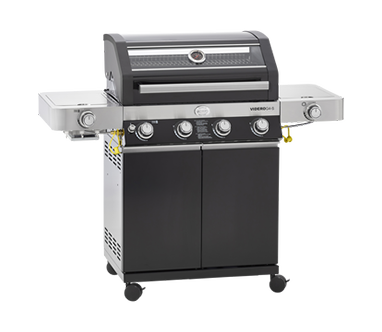
If you value functionality, quality and a clean design, a Videro gas grill from German RÖSLE is one of the ranges to consider. With smart burner systems, these grills provide several options for direct and indirect heat, while the robust construction makes them suitable for regular use.
You can explore the full RÖSLE Videro series to compare the different gas grills within the range.
FAQ: what to know before choosing a gas grill
How do you light a gas grill?
First, attach the regulator to the gas bottle and connect the other end of the hose to the grill. All burners must be switched off before you open the valve on the gas bottle. Then turn on one or more burners and press the ignition button shortly afterwards.
If the gas grill does not light, switch off all burners, leave the lid open and disconnect the gas before trying again. Gas can collect in pockets and ignite all at once, so this risk should be avoided. Always switch off the valve and disconnect the gas bottle after use.
How much gas does a gas grill use?
Gas consumption depends on the size of the grill, the number of burners and the heat setting. A typical gas grill uses around 400 to 600 grams of gas per hour per burner at maximum heat. If the grill is used once a week, many households can manage with a 10 kg gas bottle for a year, although usage will naturally vary.
How do you use a gas grill?
It is a good idea to start by preheating the grill with the lid closed for 10 to 15 minutes. This helps create even heat distribution and also burns off the grate, making it easier to clean with a grill brush afterwards.
Then adjust the burners to the heat level you want. On many models, you can cook with both direct and indirect heat. Indirect heat is often recommended when preparing larger cuts of meat such as roasts or a whole chicken.
How hot does a gas grill get?
One of the main strengths of a gas grill is its ability to reach high temperatures. This can improve the result of many dishes, including pizza, where high heat helps create a crisp base. You can use the built-in thermometer on the grill to monitor the temperature and keep better control over cooking.
Among the grill accessories available, you will find both food thermometers and grill gloves to help when working with high heat.
What can you cook on a gas grill?
A gas grill can be used for a wide range of dishes, including steaks, burgers, sausages, vegetables, fish and pizza. For many shoppers, this is part of the appeal of the category. You are not just choosing a heat source, but comparing setups that support different ways of grilling.
With the right grill tools, you can also prepare chicken, duck or roast pork on a gas grill when using a rotisserie that helps retain juices during cooking.
What is indirect heat on a gas grill?
Indirect heat means the food is not placed directly above a lit burner. This is useful for slower grilling and roasting of larger pieces of meat. It creates oven-like conditions inside the grill, so food can cook evenly without burning on the outside too quickly.
How do you grill with indirect heat?
To cook with indirect heat, switch off the middle burners and leave the outer burners on. Place the food above the burner that is off, creating a cooler zone, and close the lid. This gives good heat inside the grill while avoiding a direct flame under the food.
Cleaning a gas grill
Cleaning is important both for the cooking result and for the life of the grill. A well-maintained grill helps keep old grease and food residue away from new meals, and regular cleaning can also help prevent the burners from becoming blocked.
If you are comparing gas grills, maintenance is another practical point to keep in mind. Once you have looked at size and burner configuration, it is worth thinking about how easy the grill will be to clean as part of regular use.
How to clean your gas grill
1. Let the grill cool down before cleaning. A gas grill becomes very hot, so it should cool properly first.
2. Remove the detachable grill grates. Once they are cold, they are easier to clean outside the grill. Use a grill brush on the grate.
3. Open the burners. Use a brush over the openings to remove any blockages.
4. Wipe the inside of the grill and clean the drip tray. After removing the grates, you can reach the areas beside the burners, remove food residue with a spatula and wipe afterwards with a cloth.
5. Use a clean, damp cloth on the outside of the grill. Warm water may be enough, though a cleaning product can also be used if the exterior is very greasy.
Find the right gas grill for your outdoor space
When you compare gas grills, it helps to think in stages: first the size, then the number of burners, then any extra functions and finally the accessories that complete the setup. That makes the category easier to navigate and helps narrow the choice from many models to the ones that match your space and cooking needs most closely.
Several gas grills are supplied without a table, but you can also find a range of grill tables to pair with your grill. If you want to look more broadly across the range again, the main grill overview and related categories make it easier to compare formats before deciding on the gas grill that suits you best.
Frequently asked questions
How do I choose the right gas grill for my needs?
A useful starting point is to look at size, burner layout and any extra functions such as side burners. In everyday use, this means that a compact grill may suit a smaller outdoor area, while a larger model with more burners can give you more flexibility when cooking for several people.
How many burners do I need on a gas grill?
The number of burners affects both cooking space and how you manage heat across the grill. In practice, this helps you create different heat zones, which can be useful if you want to cook several foods at the same time or use indirect heat for larger pieces of meat.
How do you light a gas grill safely?
Start by attaching the regulator to the gas bottle and connecting the hose to the grill, making sure all burners are switched off before opening the gas valve. In everyday use, this means you should then turn on one or more burners and press the ignition button shortly afterwards, and always switch off the valve and disconnect the bottle after use.
How much gas does a gas grill usually use?
Gas use depends on the size of the grill, the number of burners and the heat setting you choose. In practice, a typical grill uses around 400 to 600 grams of gas per hour per burner at maximum heat, which helps you estimate usage based on how often and how intensely you grill.
How do you use a gas grill for everyday cooking?
It helps to preheat the grill with the lid closed for 10 to 15 minutes before you start cooking. This makes it easier to get even heat across the grill and also helps burn off the grate, so cleaning afterwards is more straightforward with a grill brush.
What is indirect heat on a gas grill, and when should I use it?
Indirect heat means the food sits away from the lit burner instead of directly above it. In everyday use, this helps you cook larger cuts such as roasts or a whole chicken more evenly, because the grill works more like an oven with heat circulating around the food.
What can you cook on a gas grill?
A gas grill can be used for steaks, burgers, sausages, vegetables, fish and pizza, and it can also handle larger items such as chicken or roast pork when used with suitable accessories. In practice, this helps you use the grill for both quick everyday meals and slower cooking methods depending on the setup.
How do you clean a gas grill properly?
Let the grill cool down first, then remove the grates, brush them clean and clear any blockages from the burner openings. This makes it easier to keep grease and food residue from building up, and cleaning the inside, drip tray and exterior regularly can help the grill continue to work as intended.