
Break the crust without crushing the crumb
Bread is part of many everyday meals, and a bread knife is one of those kitchen tools that often gets used without much thought. Its long serrated blade is made for slicing, dividing and sawing through bread into neat pieces. That same shape also makes it useful when you want cleaner cuts in cakes and other baked goods.
Because a bread knife is often used again and again, it makes sense to compare the range carefully. On this page you can look at different bread knives and narrow your choice by the details that matter most in daily use, such as blade shape, handle style and how the knife fits with the rest of your collection.
If you are browsing more widely, this category sits within our wider selection of kitchen utensils and our full range of kitchen knives. That makes it easier to move from a broad overview to a more specific choice when you know you need a serrated knife for bread and baked goods.
Bread knives: an everyday kitchen essential
A bread knife is especially helpful for tasks where smooth-edged knives can struggle. The serrated edge breaks through a crisp crust more easily, while helping you avoid pulling and tearing the soft crumb inside. The result is a cleaner, more even slice.
What is a bread knife?
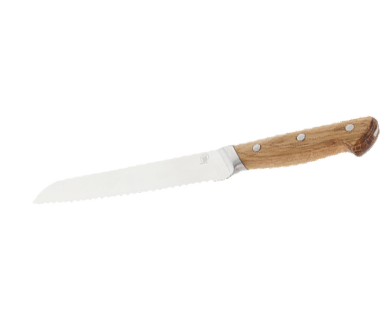
A bread knife is defined by its long blade and serrated cutting edge. It is designed to be used with a sawing motion, letting the blade work its way through the loaf with steady strokes rather than pressure alone. That is what makes it suitable for bread with both firm crusts and softer centres.
As you compare bread knives, one practical difference is the handle. Handles come in different materials, so your choice often comes down to what feels right in your hand and what fits your preferences. Some may prefer a wooden handle, while others look for an ergonomic plastic handle. Comparing these options on the page can help you move from the general category to the specific bread knife that feels right for you.
Can a bread knife be sharpened?
Yes, a bread knife can be sharpened, but it is more challenging than sharpening a smooth-edged knife because of the serrated edge. If you have never sharpened a bread knife before, it is important to understand the process properly before you begin. The wrong technique can do more harm than good.
If you are looking at care and upkeep as part of your decision, you can also view our selection of knife sharpeners. They are suitable for many different knives, but a bread knife needs special treatment, so it is worth keeping that in mind when comparing maintenance options.
What can you use a bread knife for?
As the name suggests, a bread knife is primarily made for slicing bread, but it can also be used for more than that. In everyday use, it is helpful for cakes and other baked goods, and it can also be used for delicate fruits and vegetables such as tomatoes. The serrations can grip and break smooth tomato skin more easily than some other knives.
If you are replacing more than one knife and would like your kitchen knives to match, a practical next step is to look at our knife sets. You can also compare individual types if you are building your collection piece by piece, such as chef’s knives and santoku and nakiri knives. For more specialised tasks, you can also explore carving knives and sets, fillet knives and herb knives.
Looking across related categories can make the decision easier. Some shoppers arrive knowing they need a bread knife specifically, while others start with the broader knife category and compare blade types according to what they cut most often. That step-by-step approach can help you choose with more confidence.
How to choose the right bread knife
When you browse bread knives online, it helps to start with the main purpose of the knife. If you mainly want neat slices of bread, a classic serrated bread knife is the obvious choice. If you also want it for cakes or tomatoes, it can be useful to compare the overall shape and feel of the knife so you find one that suits those tasks too.
Another useful way to choose is to look at how the knife fits into the rest of your kitchen setup. Some shoppers want a single bread knife to complement existing knives, while others want a coordinated look across their collection. In that case, moving between bread knives and the related knife categories can help you find a more consistent set of tools.
Storage is also worth considering before you decide. To protect the serrated edge, it is best not to store the knife loose in a drawer with other utensils. Instead, you can look at knife blocks and magnets, which are a more suitable way to store bread knives and other kitchen knives.
How to take care of your bread knife
A good bread knife can remain a reliable part of your kitchen for many years if it is cared for properly. Daily care matters because the serrated edge should stay clean and protected to keep cutting neatly.
Storage
Avoid storing your bread knife loose in a drawer together with other utensils. That can damage the serrated edge over time and make the knife less effective. A knife block or magnetic knife holder is a better option when you want to protect the blade between uses.
Maintenance
Try not to use the knife on very hard surfaces such as glass or stone boards, as these can dull or damage the serrations. Over time, the knife may still become less sharp. Sharpening a bread knife is different from sharpening a standard knife, so some people prefer professional sharpening or practise first on an older bread knife.
Cleaning
A bread knife should always be washed by hand in warm water with washing-up liquid. It should not be cleaned in the dishwasher, as that environment can dull the blade. Hand washing is the better choice if you want to maintain the knife's cutting performance for longer.
Find the right bread knife for your kitchen
A bread knife is an important part of any collection of kitchen knives. Whether you are comparing options for everyday bread slicing or want a serrated knife that also handles cakes and tomatoes well, this category helps you focus on the features that matter most. From here, you can stay within bread knives or continue into related categories to compare matching knives, specialist knives and storage solutions, depending on how you want to build your kitchen collection.
Frequently asked questions
What is a bread knife used for?
A bread knife is mainly used for slicing bread with a sawing motion, thanks to its long serrated blade. In everyday use, this means that it can cut through a firm crust while helping you keep the softer crumb underneath more intact. It can also be useful for cakes, other baked goods, and delicate foods such as tomatoes.
Why is a serrated bread knife better for crusty bread?
The serrated edge helps break through a crisp crust more easily than a smooth-edged knife. In practice, this helps you avoid pressing down too hard and reduces tearing in the soft centre of the loaf. This makes it easier to get cleaner, more even slices.
How do I choose the right bread knife?
It helps to start with what you want the knife to do most often, such as slicing bread, cutting cakes, or handling tomatoes. In everyday use, this means comparing details like blade shape and handle style to see what feels most practical in your hand. It can also help to think about how the knife fits with the rest of your kitchen knives and storage.
What differences should I look at when comparing bread knives?
One of the main differences is the handle, as bread knives can come in different materials and shapes. In practice, this helps you choose between options such as a wooden handle or an ergonomic plastic handle, depending on what feels comfortable to hold. You may also want to compare the blade shape if you plan to use the knife for more than just bread.
Can a bread knife be sharpened?
Yes, a bread knife can be sharpened, but it is more difficult than sharpening a smooth-edged knife because of the serrations. In practice, this means you need to understand the method properly before trying it yourself, as the wrong technique can damage the edge. Some people prefer professional sharpening or practise first on an older bread knife.
How should I store a bread knife?
It is best not to store a bread knife loose in a drawer with other utensils. In everyday use, this helps protect the serrated edge from damage that can happen when the blade knocks against other items. A knife block or magnetic knife holder is a more suitable way to store it between uses.
How do I clean and maintain a bread knife?
A bread knife should be washed by hand in warm water with washing-up liquid rather than cleaned in the dishwasher. In practice, this helps protect the blade from dulling and keeps the knife cutting more neatly for longer. It is also best to avoid very hard cutting surfaces such as glass or stone boards, as these can damage the serrations over time.
How can I narrow down the right bread knife online?
A practical way to narrow your choice is to focus on the details that matter most in daily use, such as blade shape, handle style, and whether you want the knife to match others in your kitchen. This makes it easier to move from broader browsing to more specific selections based on how you cook and what you cut most often. If you are comparing a wider range of knives, looking at related knife types and storage options can also help you make a clearer decision.