

Make the meal part of the experience with carving at the table
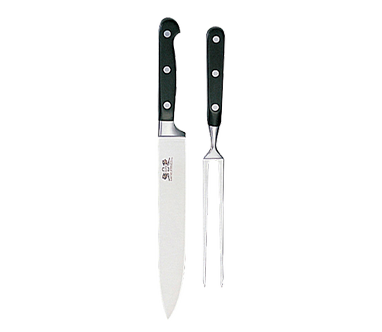
Serving a roast or other cooked meat can become part of the meal itself when the carving is done at the table. A carving knife is made for neat, even slices, and the matching fork in a two-piece set helps hold the meat in place while you carve. This combination gives you more control during serving and adds a refined look to the presentation of meat and fish.
On this page you can explore Carving Knives & -Sets from brands such as Lion Sabatier and RÖSLE. Some shoppers prefer a single carving knife, while others want a matching two-piece set for serving. A practical way to choose is to start with whether you need only the knife or both knife and fork, and then compare the shapes and finishes that suit the rest of your kitchen knives.
Precise carving for roasts and poultry
In classic kitchen terms, carving a roast or poultry is also known as trancheing, which is why a carving knife may also be referred to as a trancheing knife. The purpose is the same: to cut cooked meat into even slices with good control.
If you are looking through the wider selection of kitchen utensils, this category is a more focused place to compare knives intended specifically for serving cooked meat. Within the broader range of kitchen knives, carving knives stand apart because they are shaped for slicing and presentation rather than for general prep work.
What is a carving knife?
A carving knife is a kitchen knife designed for cutting meat such as roast, turkey and ham. It has a long, narrow and often slightly curved blade, which makes it easier to cut even slices and work close to the bone. The shape of the blade gives precision and control when the knife is used for serving meat.
What is a carving knife used for?
A carving knife is intended for different types of meat and has a stiffer blade than a fillet knife. That makes it a more versatile choice when you want one knife for serving several kinds of cooked meat. It is also often chosen for its more elegant appearance, which matters when carving is part of the presentation at the table.
Should you choose a carving knife or a chef’s knife?
For most situations, this is not a matter of one or the other, but of using each knife where it works best. A chef’s knife is useful for preparation and cooking tasks, while a carving knife comes into its own during serving. If you typically prepare ingredients first and then want a more precise knife for the final slicing, this helps you separate prep from presentation.
A carving knife is sharp and comfortable to handle, so it can also be used on vegetables, including firmer ones. Even so, its main purpose is clear when working with cooked food. If you want a dedicated knife for herbs or small produce, you can also compare herb knives, while Santoku and Nakiri knives are another category to look at when vegetables are a bigger part of your cooking.
A two-piece carving set adds elegance to serving
A two-piece carving set adds an elegant detail to the table. With a carving knife and a matching carving fork, you can slice through roasts and poultry with steady control. The fork helps keep the meat in position while the knife makes clean cuts, which is especially useful when serving directly at the table.
When choosing between a single knife and a carving set, think about how you usually serve. If you already have a serving fork you use, a single carving knife may be enough. If you want a coordinated solution designed to work together, a set can make comparison easier because you know both parts match in style and function.
Across the range, you will find blades in quality steel and handles in materials such as durable plastic and wood. These differences are useful when narrowing down the selection. Some shoppers start with appearance and choose the finish they want on the table, while others begin with handling and compare how the knife and fork feel as a pair.
Care tips for carving knives and carving sets
If you want your carving knife or carving set to stay sharp and look good over time, correct care and storage matter. This is especially relevant for knives used both for serving and presentation, where the finish is part of the overall impression.
Cleaning
Whatever material the handles are made from, both the knife and the carving fork should be washed by hand. Use warm water and soap, and dry them straight after washing. Dishwashers can be too harsh for both the knife and the fork, so they should not be cleaned that way.
Maintenance
It is important to keep a carving knife sharp, so occasional sharpening is part of regular care. If the blade starts to feel dull, you can look at knife sharpeners to maintain the cutting edge and keep slicing precise.
Storage
Store the carving knife and fork on a knife magnet or in a knife block to protect the blade and help preserve the finish. Good storage also makes it easier to keep serving knives separate from the knives you use every day for prep.
If you are replacing more than one knife, it may be useful to compare complete knife sets. In several sets, you may also find carving knives and carving forks together with other kitchen essentials. Depending on the set, this can include a small utility option such as a herb or tomato knife and a dedicated vegetable knife.
As you compare categories, it can also help to keep each knife’s role in mind. A carving knife is intended for serving cooked meat, a chef’s knife covers broad prep work, and a fillet knife is shaped for more flexible work with fish. If you also need a knife for crusty loaves at the table, you can continue to bread knives as another specialised option within the same knife range.
Find the right carving knife or set for your kitchen
When you browse this category, it is easiest to move from broad needs to specific details. First decide whether you want a single carving knife or a two-piece set. Then compare blade shape, handle material and overall look. That gives you a clear way to narrow the selection and choose a knife that fits both your serving needs and the rest of your kitchen equipment.
If your carving is usually done at the table, a matching set may be the more suitable choice. If your focus is simply getting neat slices of roast, turkey or ham, a single knife may be enough. Either way, this category brings together the options designed for this exact task, so you can compare them side by side and make a more informed choice.
Frequently asked questions
What is a carving knife used for?
A carving knife is used for slicing cooked meat such as roast, turkey and ham. Its long, narrow blade is shaped for neat, even cuts, and in everyday use this means that serving meat at the table can be more controlled and precise.
What is the difference between a carving knife and a chef’s knife?
A chef’s knife is mainly used for general preparation tasks, while a carving knife is designed for the final slicing and serving of cooked meat. In practice, this helps you separate prep work from presentation and use each knife where it works best.
Should I choose a single carving knife or a carving set?
A single carving knife may be enough if you already use a serving fork or only need the knife itself. A two-piece carving set includes a matching fork to hold the meat steady, and this makes it easier to carve neatly when serving directly at the table.
Why does a carving set include a fork?
The carving fork is there to keep the roast or poultry in place while you slice. In everyday use, this helps you make cleaner cuts with better control, especially when carving at the table in front of guests.
How do I choose the right carving knife or set?
A practical way to choose is to start by deciding whether you need just the knife or both the knife and fork. After that, you can compare blade shape, handle material and finish, and this makes it easier to narrow the filtered choices to something that suits your serving style and the rest of your kitchen knives.
Can a carving knife be used for anything besides meat?
A carving knife can also be used on vegetables, including firmer ones, because it is sharp and comfortable to handle. In practice, this gives you some flexibility, although its main purpose is still serving cooked meat rather than everyday prep work.
How should I clean and care for a carving knife or carving set?
Both the carving knife and fork should be washed by hand with warm water and soap, then dried straight after washing. This helps protect the finish, and occasional sharpening makes it easier to keep the knife cutting clean, even slices.
What is the best way to store a carving knife and carving fork?
It is best to store them on a knife magnet or in a knife block. This helps protect the blade and preserve the finish, and in everyday use it also makes it easier to keep serving knives separate from the knives you use for regular prep.