
Versatile santoku and nakiri knives in carefully selected quality
In this category, you will find santoku and vegetable knives chosen for the qualities many people look for when comparing kitchen knives. The range includes knives with sharp stainless steel blades, durable materials and designs that combine function with a comfortable feel in use. If you are narrowing down your options, this page helps you compare Japanese-style all-round knives with knives made more specifically for vegetable preparation.
Several models are designed to support precise work in the kitchen, whether you are slicing thin strips, refining diced ingredients or chopping herbs and vegetables. A practical way to choose is to start with the tasks you want the knife to handle most often. If you want one knife for several types of preparation, a santoku can be a useful choice. If your focus is mainly vegetables, a nakiri or another vegetable knife may suit you better.
As part of the wider selection of kitchen utensils, this page also sits within our range of kitchen knives. That makes it easier to move from a broad overview into a more specific knife type and compare shapes and uses across the assortment.
What defines a santoku knife?
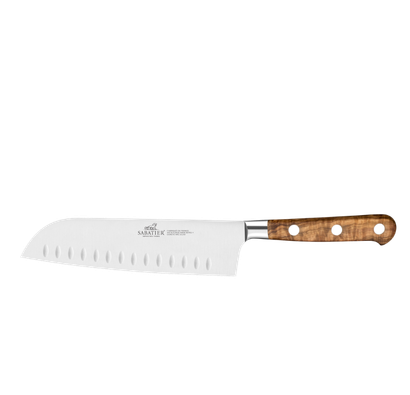
The santoku is a Japanese knife known for its versatile design. The name refers to three main purposes: slicing, chopping and making precise dice. It is typically recognised by its broad, sharp blade, which is designed for accurate kitchen work. For many cooking tasks, this makes the santoku a practical middle ground between a specialist knife and a more general-purpose knife.
If you are browsing this category and trying to understand where santoku knives fit, they are often considered a strong option for users who want control and versatility in one knife. They are especially suited to preparation tasks where precision matters, and they can be used for herbs, vegetables and many everyday cutting jobs.
Santoku knife or nakiri knife?
Santoku and nakiri knives are not the same, even though both are Japanese knives associated with precision and quality. The main difference lies in their design and intended use. A santoku is more versatile and covers several preparation tasks, while a nakiri has a more rectangular blade shape and is made specifically for cutting and slicing vegetables.
For most situations, the choice depends on whether you want a broader all-round knife or a knife with a clearer focus on vegetable work. If you regularly prepare a wide mix of ingredients, a santoku gives you more flexibility. If your priority is slicing and cutting vegetables, a nakiri offers a more dedicated approach. The two types can also complement each other well in a well-equipped kitchen.
Is a santoku the same as a vegetable knife?
Both yes and no. There are many knives made specifically as vegetable knives, while the santoku is more versatile than that. You can absolutely use a santoku as a vegetable knife, but it is also designed for a wider range of tasks. That is why this category is useful when you want to compare a multi-purpose Japanese knife with knives that are more directly aimed at vegetable preparation.
If you are deciding between categories, it can help to think about how specialised you want your knife to be. Some shoppers start with a santoku because it covers several needs, while others prefer to add a dedicated vegetable knife alongside other knife types.
Why choose a santoku knife?
A santoku is often chosen for its sharpness, balance and versatility. These qualities make it a useful kitchen knife, especially if you value precise cutting work. In everyday use, that can mean easier chopping, cleaner slices and better control during preparation.
When comparing products on a webshop, it is often helpful to move from function to details. Start by deciding whether you want an all-round Japanese knife or a more specialised vegetable knife. Then compare handle materials, blade shape and the overall design that feels right to you. Some shoppers also prefer to compare this category with other knife types, such as chef's knives, herb knives, bread knives, fillet knives or carving knives and sets when building a more complete knife selection.
How to choose the right santoku or nakiri knife
A simple way to choose is to look for a design that suits your preferences. In this assortment, you can explore different handle materials and finishes as part of your comparison. The category is built to help you move from a general need, such as wanting a precise preparation knife, to a more specific choice based on shape, feel and intended use.
If you want one knife that covers several jobs, start with santoku models. If you mainly want a knife for vegetables, compare nakiri and other vegetable knives more closely. You can also consider whether you prefer to buy one knife at a time or look at knife sets, where both sharpening tools and santoku knives may be included.
Whatever you choose, kitchen knives should not be washed in the dishwasher. Harsh treatment can dull the blade and may also damage it. Good care plays an important part in keeping your knife working well over time.
Care for your santoku and nakiri knives properly
Storage
Proper storage is important if you want to protect a sharp blade. Avoid keeping knives loose in a drawer, where they can knock against other utensils. Instead, store them in knife blocks and magnets. Storage solutions like these help protect the blade while also keeping your knives organised and easy to reach.
Maintenance
Even a good santoku or vegetable knife can lose some sharpness over time, so regular maintenance matters. Use the right technique and tools to keep your kitchen knives sharp. If you are comparing care products, you can explore our range of knife sharpeners to find the option that suits your knives and routine.
Cleaning
To maintain both appearance and function, clean your knife correctly after use. Wash it by hand with mild soap and warm water, then dry it straight away. A good kitchen knife should never be cleaned in the dishwasher, as that environment can damage the blade and shorten the knife's working life.
Find the right knife for your kitchen work
If you are looking for a knife that can handle a range of preparation tasks, this category gives you a clear place to compare santoku knives and dedicated vegetable knives side by side. The selection makes it easier to understand the differences between a versatile Japanese all-round knife and a more specialised rectangular nakiri shape for vegetables.
From here, you can continue exploring other parts of the knife range depending on what you need next, whether that is a single specialist knife, a broader assortment or storage and sharpening accessories. By moving between knife categories in a structured way, it becomes easier to build a selection that matches the tasks you want to cover in the kitchen.
Frequently asked questions
What is the difference between a santoku knife and a nakiri knife?
A santoku is designed as a versatile Japanese-style knife for slicing, chopping and fine dicing, while a nakiri has a more rectangular blade and is made mainly for vegetables. In everyday use, this means a santoku can cover a wider range of kitchen tasks, whereas a nakiri is better suited to focused vegetable preparation.
How do I choose between a santoku knife and a vegetable knife?
A practical way to choose is to start with the jobs you want the knife to handle most often. If you want one knife for several preparation tasks, a santoku is often the better fit, while a nakiri or other vegetable knife makes more sense if you mainly cut and slice vegetables.
Can a santoku knife be used as a vegetable knife?
Yes, a santoku can be used for vegetables, but it is not limited to that purpose. In practice, this helps you if you want one knife that can handle herbs, vegetables and other everyday cutting work rather than choosing a more specialised knife.
Why do people choose a santoku knife for everyday cooking?
A santoku is often chosen for its sharpness, balance and versatility. In everyday use, this means it can help with cleaner slices, easier chopping and better control when you are preparing different ingredients.
What should I compare when choosing santoku and nakiri knives online?
It helps to begin with function and then compare details such as blade shape, handle materials and overall design. This makes it easier to move from a general need, such as a precise prep knife, to narrower options that suit how you like a knife to feel and work.
Should santoku and nakiri knives go in the dishwasher?
No, these knives should be washed by hand rather than cleaned in the dishwasher. In practice, this helps protect the blade from becoming dull and reduces the risk of damage that can shorten the knife's working life.
What is the best way to store santoku and nakiri knives?
They should not be kept loose in a drawer where the blade can knock against other utensils. In everyday use, storing them in a knife block or on a magnetic holder helps protect the edge and keeps the knives organised and easy to reach.
How do I maintain a santoku or nakiri knife properly?
Regular maintenance is important because even a good knife can lose sharpness over time. This makes it easier to keep the knife working well if you use suitable sharpening tools and clean it by hand with mild soap, warm water and immediate drying after use.