
Find the chef's knife that suits you
Our range of Chef's Knives includes models from recognised brands such as RÖSLE, Lion Sabatier and Morsø. Whether you are looking for a particular size or a specific style, this category makes it easier to compare the options and narrow your choice. If you are browsing more broadly first, you can also explore our wider selection of kitchen utensils or go directly to our full range of kitchen knives.
If you are unsure which chef's knife to choose, it helps to start with three practical points: balance, size and material. These are the main differences most shoppers compare when deciding which knife will feel right in daily use.
A good chef's knife should have good balance
A chef's knife should meet at least two essential criteria: it should be sharp, and it should feel well balanced. If the balance between the blade and the handle does not feel right, the knife will not sit comfortably in the hand.
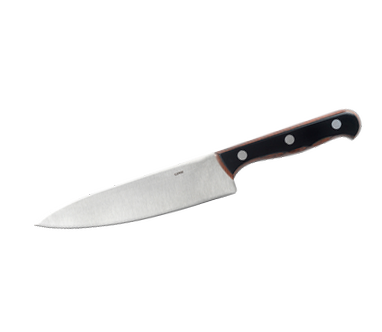
With good weight distribution, you can often feel the quality of a chef's knife as soon as you pick it up. In everyday use, a chef's knife should feel like a natural extension of your arm and give you control when you want a precise cut. When comparing products on the page, it is therefore useful to look at both the shape of the blade and the design of the handle, as these details affect how the knife feels during use.
Choose a size that matches your main tasks
When asking how long a chef's knife should be, a practical way to choose is to think about how you mainly use it. Many people assume that a larger blade is always the best option, but the right size depends on the tasks you want the knife to handle.
If you often work with smaller vegetables and fish, a smaller chef's knife may be easier to control and more practical to use. In most situations, choosing the blade length carefully helps you find a knife that matches your usual kitchen tasks rather than simply choosing the largest model.
In this category, you will find chef's knives in sizes including 15 cm, 20 cm and 25 cm. This gives you a clear way to compare compact, medium and larger options before deciding which size suits your needs best.
If you are looking at other knife types alongside a chef's knife, it can also be useful to compare them with more task-specific alternatives. A Japanese-style santoku and nakiri knife may be worth considering if you want a versatile option within a different blade style.
Materials and quality
Alongside balance and size, the choice of material is an important part of how a knife feels in use, how it functions and how long it lasts. Our range includes knives made from quality materials with long-lasting durability. With blades in stainless steel and handles in strong wood types or plastic materials, you can compare robust options designed for regular use.
Material choice also affects the overall feel of the knife in the hand. Some shoppers focus first on blade material, while others compare handle materials to find the grip they prefer. Looking at both together can make it easier to choose a knife that feels right for your way of working in the kitchen.
If you need a knife for finer cutting tasks, our fillet knives are another option to explore. For serving and slicing at the table or preparing neat cuts, you can also look at our carving knives and sets. If you want a knife made for cutting loaves and baked goods, our bread knives are a useful category to compare with. We also have herb knives for tasks where a different blade shape is helpful.
How to keep your chef's knives sharp
To keep a chef's knife as a useful part of your kitchen for a long time, it is important to know how to store, maintain and clean it correctly. These points matter when you compare knives as well, because good care helps preserve both function and comfort in use.
Storage
To help maintain sharpness and extend the life of your chef's knife, store it properly. A knife should not be left loose in a drawer where the blade knocks against other utensils. A knife block or magnetic knife holder is a practical storage solution, as it helps protect the blade while keeping your knives organised and easy to access.
Maintenance
Over time, even very good knives lose some of their sharpness. Regular sharpening is therefore an important part of maintenance. With the right technique and the right tools, you can keep your knives ready for everyday tasks. You can compare suitable options in our range of knife sharpeners.
Cleaning
After use, a chef's knife should be cleaned correctly if you want to keep it in good condition for a long time. Wash the knife by hand with soap and warm water, then dry it afterwards to help prevent rust and discolouration. Knives should not be cleaned in the dishwasher, as this damages the blade and shortens the life of the knife.
Choose the right knife for your kitchen
A chef's knife is often the starting point when building or updating a knife selection, because it covers many common cutting, chopping and slicing tasks. If you need more than one knife, it can be helpful to compare different categories based on what you prepare most often. Our knife sets bring several knife types together, making it easier to create a more complete selection within the same overview.
As you move through the webshop, a practical way to choose is to begin with the broadest category, then narrow down by task. Start with kitchen knives in general, then compare chef's knives with alternatives such as santoku and nakiri knives, fillet knives, carving knives, herb knives or bread knives depending on what you need most. This makes it easier to understand whether you are looking for an all-round knife or a more specialised one.
Within this category itself, you can compare blade length, handle material and overall design to find the option that feels most suitable. For many shoppers, that step-by-step comparison is the easiest route to a confident choice: first decide the type of knife, then the size, and finally the material and storage or maintenance accessories that support it.
Frequently asked questions
How do I choose the right chef's knife for everyday use?
A practical way to choose is to start with balance, size and material, as these are the main differences explained in the category. In everyday use, this means that the knife should feel comfortable in your hand, suit your usual kitchen tasks and have materials that match the grip and feel you prefer.
Why is balance important in a chef's knife?
Balance matters because the knife should feel comfortable and controlled when you hold it. In practice, this helps you make more precise cuts, as the weight distribution between the blade and handle affects how naturally the knife moves in your hand.
What size chef's knife should I choose?
The right size depends on the jobs you do most often rather than simply choosing the largest blade. In everyday use, this means a smaller chef's knife can be easier to control for smaller vegetables and fish, while the category includes 15 cm, 20 cm and 25 cm options to make comparison easier.
What materials should I look for in a chef's knife?
The category highlights blade and handle materials as important points to compare, including stainless steel blades and handles made from wood or plastic materials. In practice, this helps you judge both durability and how the knife is likely to feel in your hand during regular use.
How should I store a chef's knife?
A chef's knife should not be left loose in a drawer where the blade can knock against other utensils. This makes it easier to protect the edge if you use a knife block or magnetic knife holder, while also keeping the knife organised and easy to reach.
How do I keep a chef's knife sharp?
Regular sharpening is an important part of maintenance because even a good knife loses sharpness over time. In practice, this helps you keep the knife ready for everyday cutting tasks when you use the right technique and suitable sharpening tools.
What is the best way to clean a chef's knife?
The recommended method is to wash the knife by hand with soap and warm water, then dry it afterwards. In everyday use, this helps prevent rust and discolouration, while avoiding the dishwasher helps reduce damage to the blade.
How can I compare a chef's knife with other knife types?
A useful approach is to start with the type of kitchen task you need to handle most often, then compare broader and narrower options from there. This makes it easier to see whether a chef's knife suits your needs best or whether a santoku and nakiri knife, fillet knife, carving knife, bread knife or herb knife may be more suitable for specific tasks.