

Drying racks for different homes and everyday needs
A drying rack is a practical part of everyday laundry care, whether you have a house with a garden or an apartment with limited space. With the right model, you get a gentle and practical way to dry clothes indoors or outdoors, while also reducing energy use compared with a tumble dryer.
A good drying rack gives you enough space for everyday laundry and larger textiles such as bed linen. It also makes it easier to dry clothes carefully, which can help extend the life of the fabric. In this category, you can compare different solutions depending on where you plan to place the rack and how much drying space you need.
At Kitchen Living Dining, this category brings together drying racks in several formats, so you can start with the overall choice and then narrow it down. Some shoppers begin with all drying racks, while others go straight to a more specific type.
Leifheit drying racks and well-planned design
Leifheit is highlighted here for durable materials and thoughtful designs. The brand includes well-known series such as Pegasus, Siena and Classic, with models that combine function and ease of use.
Within the range, you will find classic floor models, compact versions for smaller spaces and taller tower-style racks that use height efficiently. Some models also come in black and other modern colours, which can matter if the rack is often left out in the home.
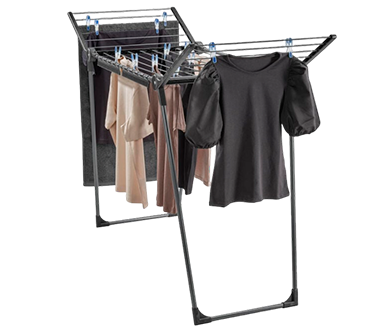
If you are comparing formats, a practical way to choose is to look first at where the rack will stand and then at the shape. Free-standing models with wings are useful when you want room for longer textiles such as sheets and tablecloths, while tower designs help you make better use of the available floor area.
How to choose the right drying rack
Drying racks come in many shapes and sizes, so the easiest way to choose is to work step by step. Start by deciding whether you need the rack mainly indoors or outdoors. Then consider how much floor or wall space you have, and whether you mainly dry small washes, everyday clothing or larger textiles.
For many shoppers, the webshop structure helps make this process clearer. If you know you want a classic model that stands on the floor, you can browse free-standing drying racks. If saving floor space is more important, it makes sense to compare wall-mounted drying racks. If you are still deciding, the wider Home decor area and the Home care overview can help you see where this category fits.
Wall-mounted drying racks
If you live in a smaller home, a wall-mounted drying rack is a useful option. It can be fixed directly to the wall and folded away when not in use. That means it takes up very little space but still provides drying area when needed.
This type is especially suitable for small bathrooms, balconies, utility rooms, kitchens and apartments with limited floor space. If your main priority is to keep the floor clear, wall-mounted models are often the most straightforward place to start comparing.
Drying racks for outdoor use
If you want to use fresh air and sunshine, an outdoor drying rack is the natural choice. Outdoor drying can shorten drying time, and laundry gets a fresh scent and a naturally crisp feel.
Outdoor models are especially useful when you do not have much indoor floor space or when you need more room for a larger amount of washing. This makes them relevant for shoppers who want to move from small indoor solutions to racks with greater capacity.
Rotary drying racks
A rotary drying rack is one of the most popular garden solutions. It opens out like an umbrella and gives you long drying lines in a compact format. This makes it a practical choice if you want a lot of drying space without using a large area.
The key differences here are capacity and layout. Rotary models are chosen for their efficient use of space, stable construction and easy opening and folding. Many can also rotate, which makes it easier to reach the whole rack while hanging out washing.
If you are exploring outdoor options, it can help to compare a rotary rack with other free-standing formats before deciding how much space and drying line you need.
Drying racks for balconies
If you live in an apartment, you can still benefit from outdoor drying. A balcony drying rack is designed to provide practical function in a limited area.
These models are typically chosen because they are light, flexible to move and compact when folded. They are suitable for smaller washes, towels or sportswear, and some can be hung directly on a railing. For most situations, the deciding factor is how much space you can spare while still wanting access to outdoor air.
Accessories for drying racks
The right accessories can make a drying setup more organised and easier to use. In this category, accessories include practical add-ons such as clothes pegs and peg bags, hanger holders that help reduce creases in shirts and blouses, sock holders for smaller textiles, and ground spikes or covers for outdoor racks.
If you want to build a more complete drying area in the garden or on the balcony, you can also look at drying lines and extra fittings for rotary and wall-mounted models. You can browse the full range of accessories for drying racks if you already know the type of add-on you need.
Common questions when comparing drying racks
What is a drying rack?
A drying rack is a stand for hanging wet laundry so it can dry naturally, either indoors or outdoors.
Which types are available?
This category includes floor-standing racks, wall-mounted drying racks, rotary drying racks for the garden and compact options for balconies. The main difference is how they use space and where they are best placed.
Can a drying rack be used outdoors?
Yes, many drying racks are suitable for use in the garden, on a balcony or on a terrace. If outdoor drying is your main priority, this helps you narrow your search quickly.
How much space does a drying rack need?
That depends on the model. Some compact racks take up very little room, while larger designs offer many metres of drying line. A practical way to choose is to look at both the available space and the amount of laundry you usually dry at one time.
How do you clean a drying rack?
If the rack gets dirty, it can be wiped with a damp cloth. In general, drying racks are otherwise low-maintenance.
Can a drying rack hold heavier textiles?
Yes, especially Leifheit racks are described as being designed to hold larger and heavier textiles such as sheets, towels and duvet covers.
Can a drying rack replace a tumble dryer?
For many households, a good drying rack is enough for everyday use. It saves energy and is gentler on clothes, although drying takes longer than in a tumble dryer.
Explore related home care categories
If you are comparing products for laundry care and household routines, there are several natural next steps nearby on the site. Alongside drying racks, you can explore irons and accessories and clothes steamers. For storage around the home, see storage and organizing.
Other related home care categories include cleaning supplies, floor cleaning, window cleaning and vacuum cleaners and accessories. You can also browse categories such as climate and ventilation, shoe dryers, thermometers and weather stations, smoke alarms and personal care.
Frequently asked questions
How do I choose the right drying rack for my home?
Start by deciding whether you need the drying rack mainly indoors or outdoors, then look at how much floor or wall space you have. In practice, this helps you narrow the choice based on where the rack will stand and how much laundry you usually dry at one time.
What is the difference between a free-standing drying rack and a wall-mounted one?
A free-standing drying rack is useful when you want flexible placement and enough room for longer items such as sheets or tablecloths. A wall-mounted drying rack is fixed to the wall and can be folded away, which makes it easier to keep the floor clear in smaller rooms.
When is a tower-style drying rack a good choice?
A tower-style drying rack is helpful when you want to use height rather than take up more floor area. In everyday use, this means that smaller homes or utility spaces can still have useful drying capacity without needing a wide footprint.
Can I use a drying rack outdoors?
Yes, many drying racks are suitable for outdoor use in places such as a garden, balcony or terrace. In practice, this helps you use fresh air and sunshine, and it can also be useful if you do not have much indoor space for drying laundry.
Why would I choose a rotary drying rack for the garden?
A rotary drying rack gives you long drying lines in a compact, umbrella-shaped format. This makes it easier to get a lot of drying space without using a large part of the garden, and many models can rotate so the whole rack is easier to reach.
Are balcony drying racks suitable for small washes?
Yes, balcony drying racks are described as a practical option for smaller washes, towels and sportswear. In everyday use, this means they work well when space is limited and you still want access to outdoor air for drying.
What accessories can be useful with a drying rack?
Useful accessories can include clothes pegs, peg bags, hanger holders, sock holders, ground spikes and covers for outdoor racks. In practice, this helps you organise the drying area more easily and adapt it to the type of laundry or setup you use.
How do you clean a drying rack?
If a drying rack gets dirty, it can be wiped with a damp cloth. This makes it easier to keep it ready for everyday use, and the category content describes drying racks as generally low-maintenance.